
(Funke Group / R. Klar / Photo)
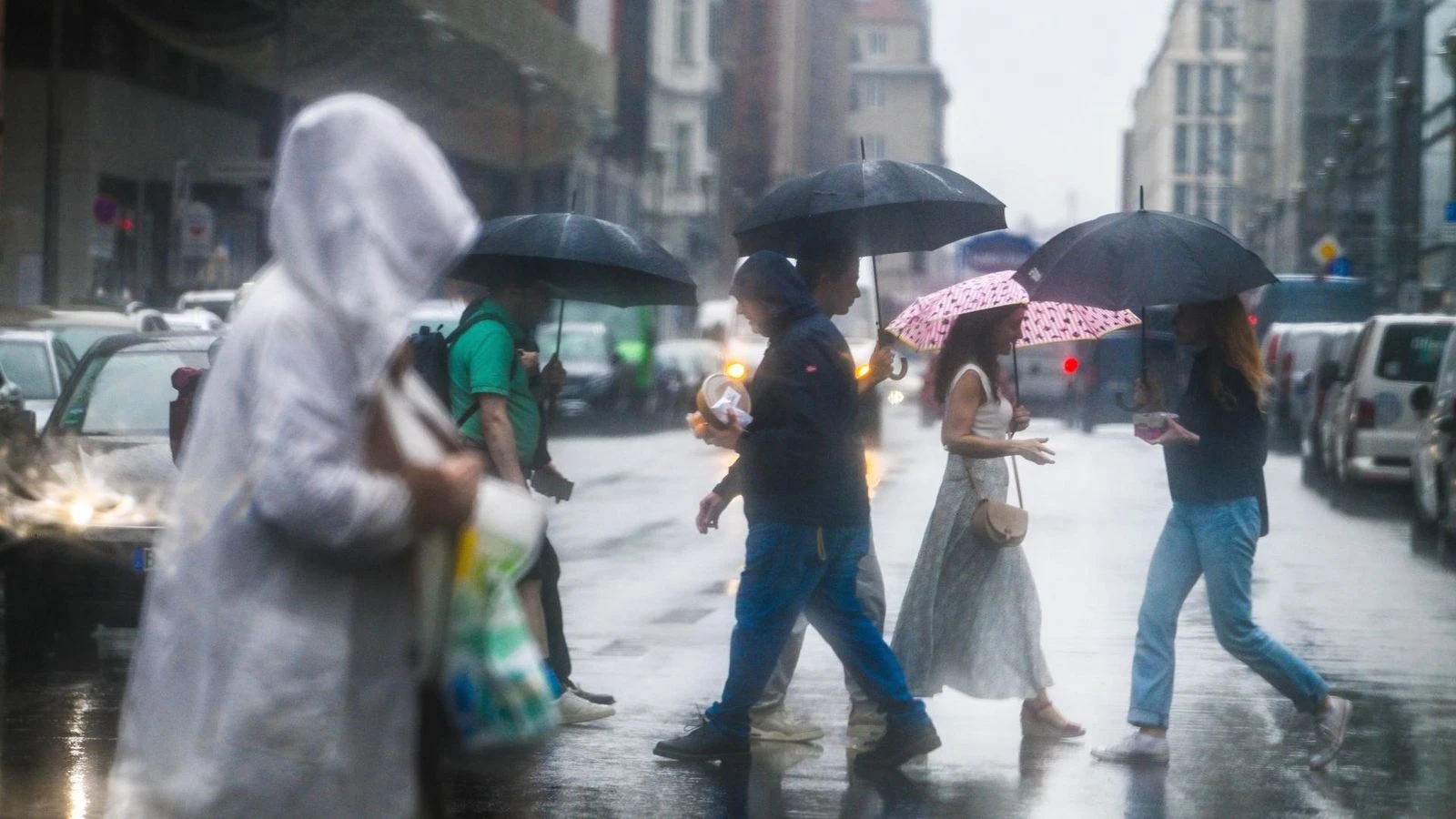
The city stands still. Rain lashes the asphalt and the concrete, as if it wanted to soften both. The sky for days now: a lead-grey slab. Berlin, on the verge of atmospheric dissolution. No sun, no shade, just this weather – Germany in autumn.
What helps now?
A fireplace – imaginary, if necessary.
And an elegant red wine. We’ll drink white wines in autumn, when it gets hot.
Here are five of the editorial team’s torrential-rain wines, which can do more than just warm you up. They stand up to the grey gloom, keeping the wet outside.
1. Castello di Brolio Chianti Classico Riserva – Archaic Consolation
The (enormous) Castello di Brolio estate, owned by the Ricasoli family for centuries, is not only a Tuscan postcard scene (for Hitler and Mussolini in 1938, for example), but also one of the Chianti’s spiritual founding homes. In the 19th century, Baron Bettino Ricasoli formulated the Chianti recipe (Riserva and the Gallo Nero); today, Francesco Ricasoli runs the winery with a clear sense of origin and typicity. And without letting the fashions of the wine world wash away the traditions.
The Riserva is not a modern, cuddly Chianti, but an angular, earthbound Sangiovese with depth, liquorice, tobacco and dried cherry. A wine that sounds like a Gregorian male choir. And one that, in torrential rain, awakens the desire to turn inwards – and cook a pot of spaghetti.
2. Faiveley Échézeaux Grand Cru – The Great Burgundy for Small Escapes
The house of Faiveley is one of the last great, owner-run négociant houses in Burgundy – and perhaps the most dynamic. Since Erwan Faiveley took over in the early 2000s, there has been investment, modernisation and selection. Today, Faiveley is regarded as the epitome of “négociant de précision” – a great name with an almost vigneron-like obsession with detail.
Forest berries, black tea, damp forest floor, then sandalwood, a touch of graphite, a hint of damson.
An astonishingly intellectual wine: great inner movement beneath a calm surface.
Anyone who still wants to go out into the rain after this is beyond help.
3. Château Belgrave – The Bordeaux Umbrella
Fifth Growth in the classification, but stylistically often closer to the Fourth, sometimes even Third Growths: Belgrave has been an insider tip for Bordeaux drinkers for years – those looking for substance, not brands. The château lies directly on the border with Saint-Julien, which is also reflected in its style: more freshness, more finesse, more leather, less blockbuster.
The 2020, for example, is a textbook vintage for days like these: blackberry, cedarwood, a hint of espresso, plenty of tension in the tannins. And exactly the kind of warmth we need now. Nothing grand, but something comforting.
4. Merlot Grande Reserve – Phillip Kuhn and the Art of Density
Phillip Kuhn from Laumersheim was once one of the first German red-wine growers to spark my interest in German red wine nearly 30 years ago. Also, and especially, because of the many international varieties that Kuhn grows and produces – varieties that are now frowned upon, but which will probably contribute greatly to the quality of German red wine both now and in ten years’ time. Kuhn’s wines stand firmly in the glass, often with almost southern European power – but never without structure. The Merlot Grande Reserve is an example of how seriously Rhineland-Palatinate can take this grape variety.
Here, dark berry fruit meets almost hammering spice, fine dark chocolate and a powerful Bordeaux undertone that genuinely recalls Pomerol. Not a whimpering Merlot, but one that leans into the weather. And wins.
5. Pinot Noir – Paul Achs and the Burgenland Pull
Paul Achs is one of those quiet, great winemakers. His biodynamically produced Pinot Noirs from Gols are not a cherry-fruit megaphone, but rather a magnetic field for the best of the best. They draw you in. Into the wine. Into the moment. Into what matters.
Achs’ Pinots show rosehip, herbs and a slightly salty note. Plenty of structure, little fat, but enormous depth. A fireside wine for people who do not condemn the rain, but accept it – as part of a mood in which wine does not accompany, but carries you.
May the sun soon shine on Berlin and on us again!