
(Manfred Klimek / WELT am SONNTAG)
Rankings rule the world – and not just since elections began or since the rock and pop music charts, which started to rank pop culture in the 1950s. Rankings are a nuisance, but they do make the search for the extraordinary easier. For example, the search for exceptional vineyards. And since 2020, there has been the ‘World’s 50 Best Vineyards’, a list that claims to bring together the world’s best vineyards, but which in fact documents one thing above all else: just how much the wine world in 2025 – in the midst of its greatest crisis since the phylloxera epidemic in the 19th century – is searching for direction. It quickly becomes clear at first glance at the list published online: it won’t find it here.
You need to know who is behind this ranking to understand its scope – and its blind spots. The list is compiled by William Drew, Tim Brooke-Webb and Mark Sansom, three leading figures in the Anglo-Saxon food media world who have already turned the ‘World’s 50 Best Restaurants’ into a global phenomenon: a chart that has produced star chefs, sidelined or destroyed established careers, and suddenly and mistakenly led the world to believe that Copenhagen was the culinary Mecca of the world. The whole endeavour of the ‘Top 50’ or ‘Top 100’ lists (now extended to include bars and hotels) is funded and supported by sponsors such as San Pellegrino, whose parent company, Nestlé, is not exactly regarded as the moral backbone of the food industry. Who makes it into the top 50 is decided by an internationally diverse panel which – as is also the case with the 50 Best Vineyards – comprises people from the travel and lifestyle sectors and invites few, if any, industry professionals to take part in the judging. That might seem new and refreshing. But it isn’t.
Stefan Doktor, managing director of the traditional Rheingau winery Schloss Johannisberg, is delighted with the World’s 50 Best Vineyards – and with good reason. His estate features on the list in 2025 as the second-best winery in the world – which is a huge achievement for a German winery. Does it make a difference? “We noticed that even last year, when we came fifth, more was happening than in the five years before that, when we were further down the rankings,” says Doktor. “Second place – which, after all, was only announced a few days ago – is already generating lots of phone calls and enquiries. It’s only really been through the World’s 50 Best Vineyards that we’ve become properly visible to people all over the world.” Doktor personally collected the second-place prize at the awards ceremony in Australia. Now, this historic winery, spectacularly situated on a hill, could well be in with a chance of taking first place in 2026.
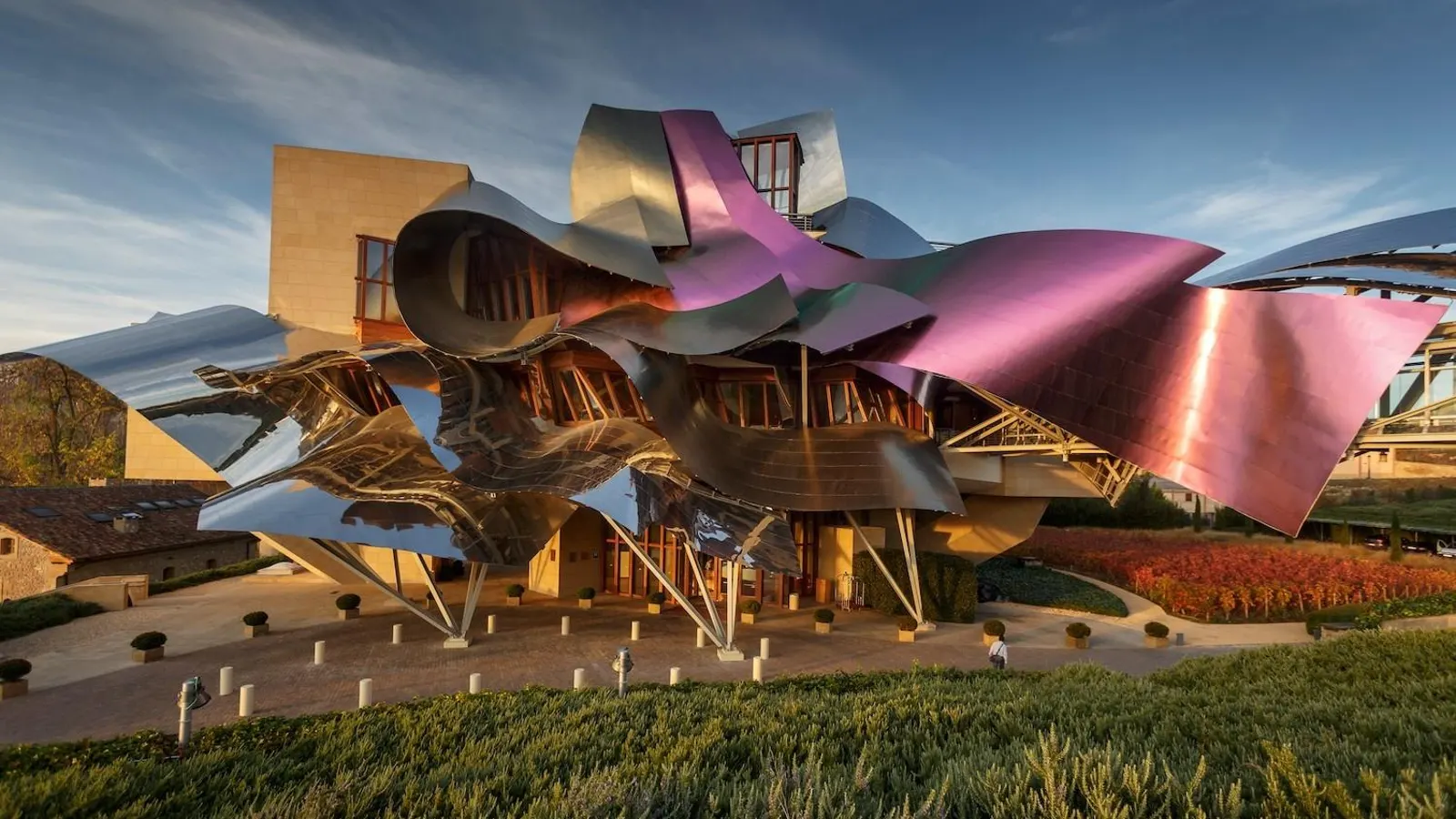
The fact that the 50 Best Vineyards panel has little fear of grand backdrops and spectacular scenery – in other words, that it focuses on the superficial – is demonstrated by this year’s first-place winner alone: VIK in Chile: a vineyard that looks as though a Scandinavian architectural firm has moulded the concept of ‘wine as an art installation’ into a visual attraction: Concrete, steel, mirrors, panoramic views, swimming pools – an oenophile’s total work of art spanning over 300 hectares, which aims to be a boutique ‘photo-spot’ hotel for the super-rich, bookable via booking.com, for example, with a discounted rate of 768 euros for a night’s stay in December. And that is precisely where the irony of this ranking lies: the architecture wins, the money wins. Not the wines, about which we can read on online retailers’ websites that they feature, for example, fashionable labels (some of which are truly horribly affected) and ‘embody the spirit of Chile’s Millahue Valley with vibrant aromas of red berries and floral notes’. This is the usual drivel spouted by investment-driven wineries seeking to reach a different clientele from that of wine enthusiasts, who are regarded in this world as arrogant, elitist and out of touch.
Among the top estates, there are also many other spectacularly designed buildings from the world of wine – such as the Japanese winery 98Wines (whose Zen-minimalist shed-like architecture doesn’t exactly invite visitors at first glance), then the historic Château Smith Haut Lafitte with its wine-loving, eco-luxury top-class hotel (one of the few estates on the list also known for its exquisite and affordable wines), or the South African Delaire Graff Estate, whose combination of art museum, diamond gallery, skincare and wellness facilities, and high-end lodge finally blurs the lines between viticulture and investment. We find Delaire-Graff at number 79 on the extended list of places 50–100, which we first have to search for and locate. It’s a shame that this extended list receives so little attention, because it is precisely here that we find a few truly exciting estates, such as Occhipinti in Sicily, the Taylors cask cellar in Porto, Champagne Phillipponat, Château Pichon Baron in Bordeaux or Castello Banfi in Tuscany. Also featured on this ‘runners-up list’ are two of Austria’s finest wineries: Tement in Southern Styria and Domäne Wachau. Although there may well have been professional wine critics on the panel, their ratings were apparently sidelined here in this supplementary section.
One member of this panel, who was contractually bound to secrecy, says: “The panel – that is, those who name their favourites and explain their choices – is quite large, comprising 720 people, 45 per cent of whom are sommeliers and wine merchants. In my region, I am just one of many contributors. So the panel itself is not to blame. What is seriously wrong, however, is the framing of the results as the ‘50 best wineries in the world’, even though the texts contain no description or evaluation of the wines whatsoever – nor did anyone ask for one. That is grossly misleading.”
For many in the global wine world, this ranking is a well-intentioned attempt to bring an increasingly fragmented industry back into focus. And indeed, the list does have its merits: it also opens our eyes to regions other than Bordeaux, Burgundy or the Rheingau. It highlights wineries that one would never discover from a German perspective. It emphasises the importance of accessibility – a key factor, given that famous wineries have long since become cultural landmarks – even as global wine sales are falling.
Yet at the same time, this list is completely blind to those winemakers who have actually transformed wine over the last 20 years: the biodynamic avant-garde, the austere, uncompromising natural wine makers, the architects of the new, streamlined, modern craft, and the many female winemakers who, with their new stylistic approaches, have also shifted the very foundations of viticulture. All these quiet revolutionaries, these sensory anarchists who have redefined winemaking from the ground up – they do not feature in the ranking. Because they cannot build spectacular visitor centres. Or do not wish to.
And why is Fred Loimer’s iconic cellar in Langenlois missing? Why not the Neumeister family’s spectacular winery in southern Styria, which has been featured in architecture magazines for years for its hanging gardens? Why are Markus Molitor on the Moselle and Van Volxem on the Saar missing – where wine has long been regarded as part of a wider world of experiences?
‘50 Best Vineyards’ offers guidance, entertainment and perhaps also an incentive to discover something new. But ‘50 Best Vineyards’ must not be held to the same level of seriousness as, say, Robert Parker’s ‘Wine Advocate’. The ‘World’s 50 Best Vineyards’ are, above all, one thing: a reflection of our times. A time in which visibility is more important than substance. And in which architecture takes the place once occupied by provenance and terroir. What remains is Instagram aesthetics. A stage, not a foundation. And an unprinted coffee-table book.
But the world of wine needs solid ground. Underfoot. Even more so than terroir. And someone to tell us where that ground really lies.