
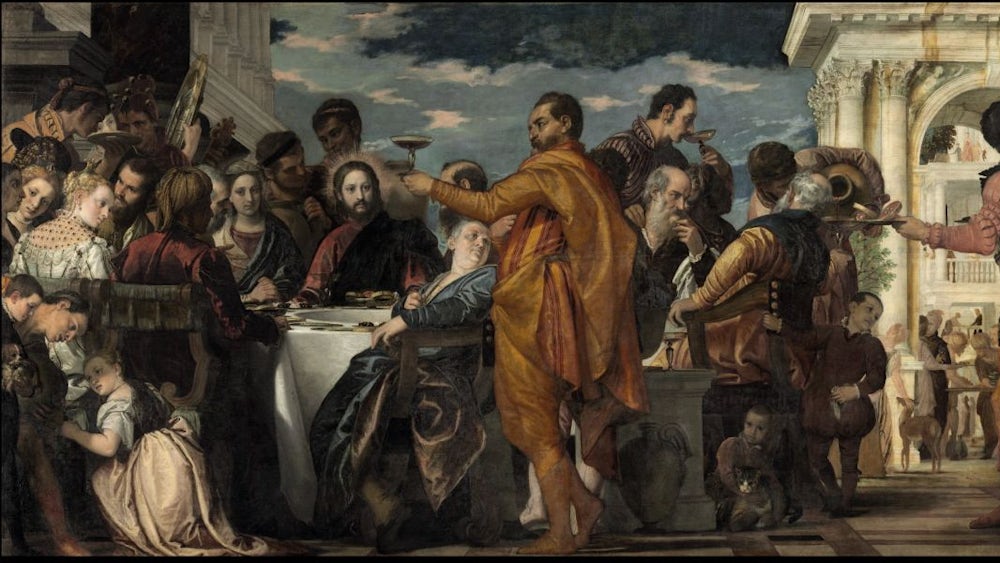
(Kunsthistorisches Museum Vienna)
Wine was never just a beverage. It was always also a narrative – of landscapes, of civilisation, of memory. Granted!
From the first clay vessel in the Caucasus to the courtly etiquette of the Grand Siècle, from the Burgundy in Hildegard of Bingen’s goblet to the single-vineyard Riesling on the menu of the Japanese emperor: wine was a universal formula. A cultural technique. A sign that people do not merely consume, but also want to bind themselves culturally through consumption. To soils. To rhythms. To origins.
In this function wine was never loud, but always profound. Never fleeting, but always alive. A beverage that stored memory – while simultaneously staging the present.
Yet somewhere on the way into the present, precisely this memory has been almost completely lost.
Today, the language of wine is splintered into marketing narratives, collections and concept bottles that are born as hype and buried as clearance stock.
That did not begin with natural wine. But that is where it became visible.
Instead of carrying forward wine’s cultural heritage, people – vintners and merchants alike – allowed themselves to be driven by a rebellious attitude. Not out of ignorance, but because of the spirit of the times: they wanted to be different, free, purist, new.
But the price was high: the links to the great narrative were severed.
The result:
Wine became pop.
An attitude.
A filter.
Orange, cloudy, unsulphured – all of that can be delicious. But too often it was sold as an attitude, not as craftsmanship. And the more fashionable wine became, the less clear its voice became.
Today, in retrospect, it is clear: the last twenty years were a triumph of aesthetics – and a loss of depth and definition. Wine has won many new friends. But its cultural weight has suffered.
It is barely part of a global cultural narrative any more. In literature, in film, in political symbolism, in philosophical discourse – wine hardly features any more. Not because it became worse. But because it became speechless.
For whoever does not tell their own story will eventually no longer be understood.
And that comes back to haunt them.
In times, when conservative currents are gaining the upper hand worldwide – in politics, the media and society – wine would have had the great task of showing that culture does not mean regression, but belonging; that origin does not mean exclusion, but responsibility; that enjoyment is not decadence, but moderation.
Yet even conservative vintners have recently found it difficult to explain wine as part of a binding culture. Their language is often empty, their imagery stuck in yesterday, their presentation lacking courage.
The liberals flirt with trends. The conservatives prefer to flirt with platitudes. And both sides have forgotten that wine only has an impact when it is more than mere taste: a symbol of human measure – between nature and order, between freedom and form.
Now that the pendulum is swinging back and many people are once again seeking rootedness, wine lacks the voice that could say something to them.
Not for lack of substance. But for lack of narrative.
Perhaps, then, it is time to go back to the beginning. Not in the sense of nostalgia. But in the sense of cultural reconstruction.
Wine does not need a new label.
It needs stories about its cultural value and its contribution to the making of civilisation, and also to the making of the West.
Only then is wine “over the hump”.