
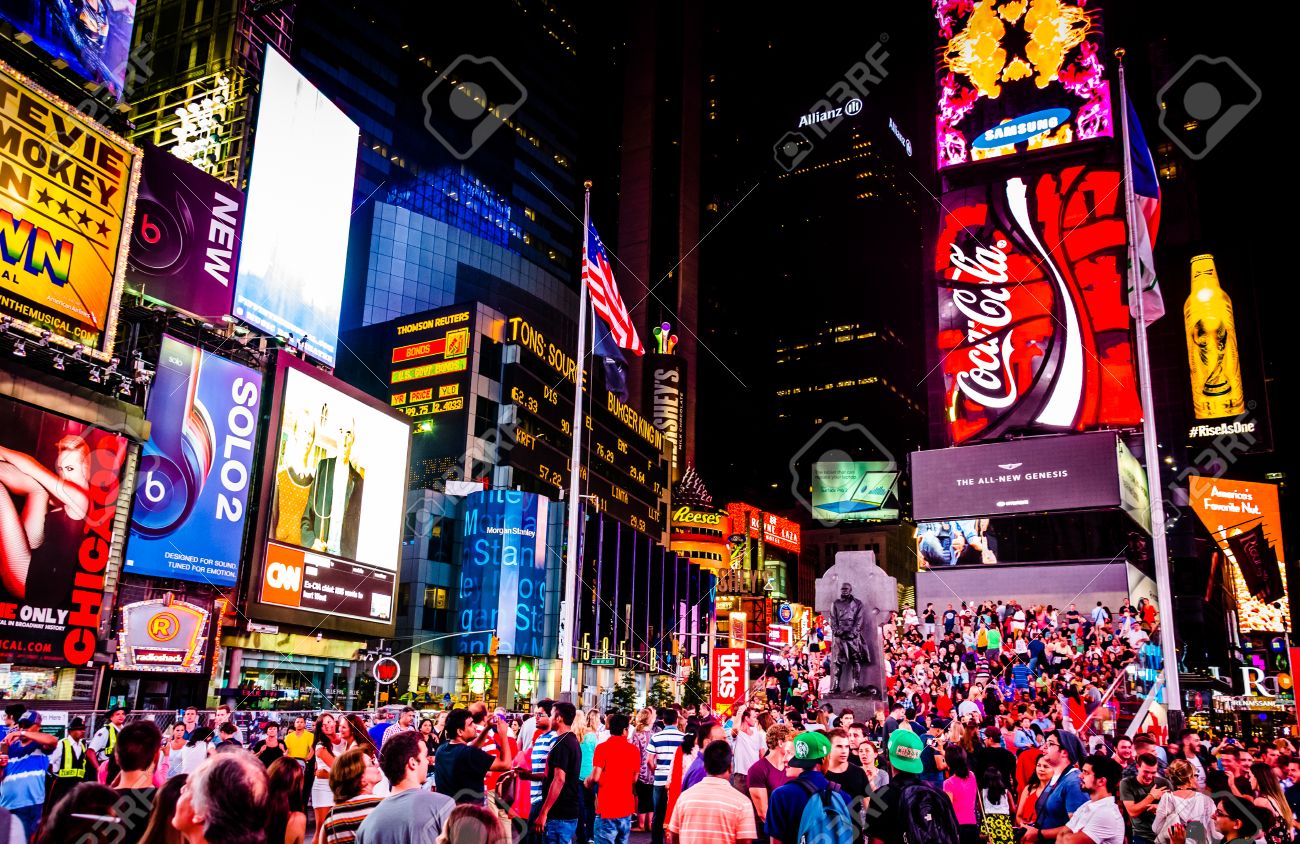
(Pic: Reuters)
by Claude Auguste
In viticulture it has always been a question of the harvest: when has the right moment come to cut, to decide, to act? Harvested too early, the wine remains green. Harvested too late, its future “oxidises”. Since 2020 (and before), something has shifted here too, in the old, weatherproof world of vines. The vegetation cycles are slipping out of their familiar rhythm: frost in May, heat in September, 16 per cent alcohol by volume in the Bordelais and, in some cases, Burgundy too, mildew in Champagne. Nothing can be taken for granted any more. Anyone making wine today is no longer merely a winegrower, but also an alarmist, an improviser, sometimes a prophet.
And that is precisely where the parallel with society begins.
For we too live, drink, conduct business and speak – as if we were still in the late harvest of the 20th century. As if there were no tomorrow that would be different from yesterday. The Western world – and with it Russia, which ideologically became part of that late modernity it claims to fight long ago – is mentally stuck in the post-war idyll between 1968 and 2001. Historically speaking, a period that was a meteorological interlude of high pressure: mild, favourable to growth and oriented towards consensus.
The 20th century had exhausted its horrors early on – Auschwitz, Hiroshima, Stalin, Mao – and then, for its Western half, worked its way decade after decade towards prosperity and liberalism. The Cold War was a theatre in which both sides knew their roles. The economy was booming, societies became more colourful, more open, more inclined towards consensus and consumption. And wine? It too became more international, sweeter, more stable and more fit for the salon.
But that was a century in which people had learnt to deal with clear adversaries, predictable currencies and analogue media.
By 2020 at the latest it became clear that the 21st century was unwilling to continue playing according to that script.
Covid was the harbinger: a global event that could not be contained, that deconstructed knowledge, shook trust and fragmented reality. Then came inflation, which burst geopolitical bubbles. Then the wars: Ukraine, Gaza – and the sense that these are merely the harbingers. And finally artificial intelligence – that invisible, elusive power that not only writes texts, but dismantles certainties.
It is not a demon, but neither is it merely a tool. It is proof that our present thinks faster than our past can follow.
No wonder there is fear. Fear of losing control. Of losing one’s job. Of a tomorrow that no longer bears a human signature.
But AI is also salvation. In medicine for instance, it is already having an impact where medical expertise reaches its limits – in early diagnosis, personalised therapy and the discovery of molecules that no one has ever seen. In climate research, biology and robotics too, it helps us make an increasingly chaotic fabric of reality legible.
And that is precisely where the difference lies:
Research lives in the present. Not in memories. Not in historical comfort zones. It is a reliable partner because it has no romantic relationship with the past. Instead, it has a radical relationship with reality.
We, by contrast – the West, Russia, a good part of the affluent world – are still clinging to a century that is over.
We still believe, that democracy is a law of nature, although it has long been an asset that must be defended.
We believe progress is linear, although history is zigzagging again.
We believe prosperity is a birthright, although it has long been up for renegotiation.
And most dangerously of all: we believe the West is the centre of the world.
In reality, however the West has by now become a repertoire of defensive postures, PR rhetoric and delayed realisation. Russia, China and the Global South are all already writing a new chapter. It has not yet been decided what it will be called. But it begins with the realisation that nothing remains as it was.
Viticulture, this grounded sensorium of our cultures, has long since felt it. The old appellations are losing their climatic reliability. New growing regions are emerging where cows once merely grazed – in southern England, Poland and Norway. The vine adapts. Humans hesitate.
Perhaps that is where the drama lies:
That we know what is coming.
But do not want to feel what is over.
The 20th century was a stroke of luck. But it was a century. No paradise. No promise of eternity.
Anyone who still lives like this today, thinking, speaking and conducting business as if it were 1995, is practising sentimental archaeology – at the risk of losing the future.