
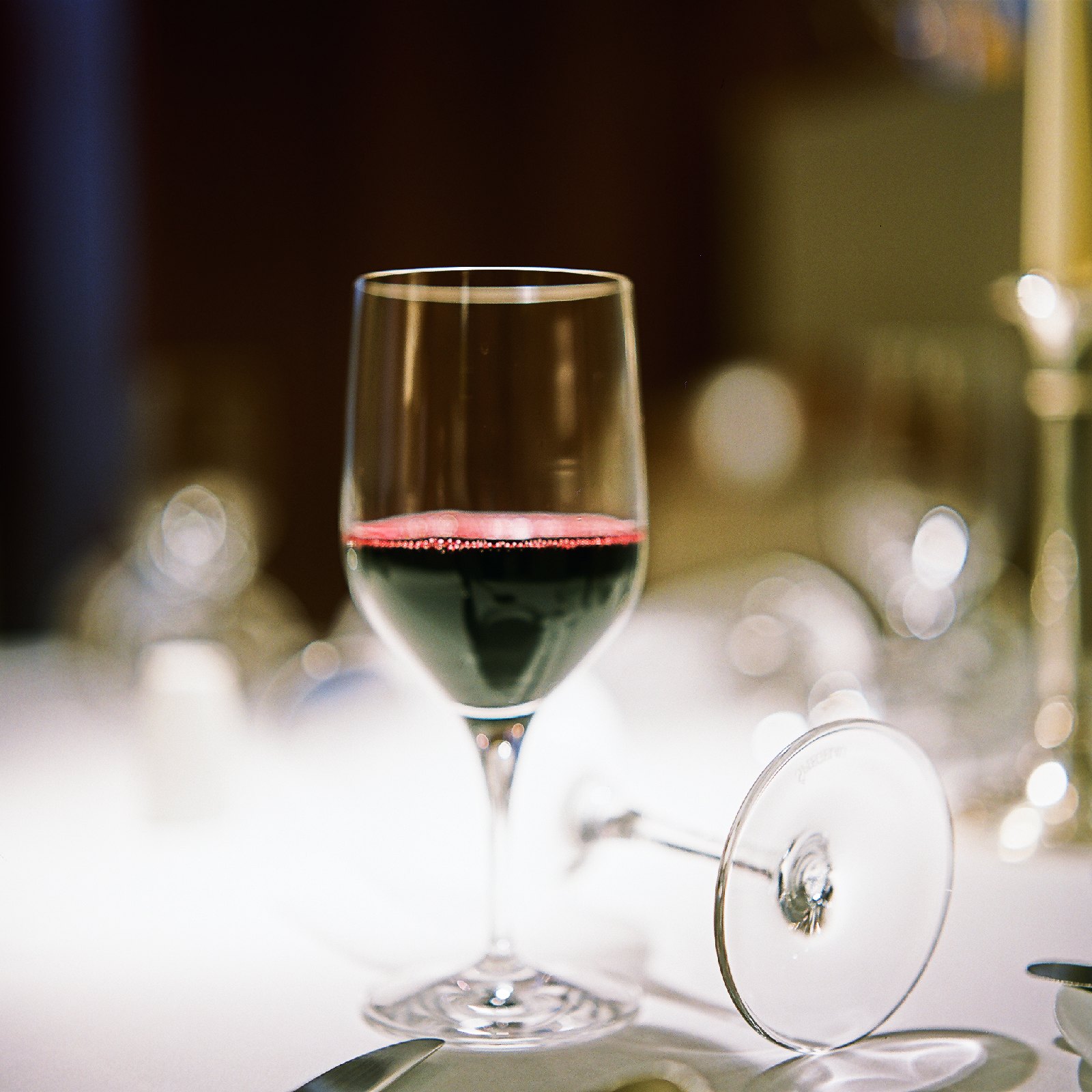
An evening in a restaurant. Also at the table is a “wine connoisseur”. I, always vain and self-important, let him go first: he is allowed to choose the six wines that we will drink on this Berlin late-summer evening beneath an overcast sky. Everyone is curious.
And the “wine connoisseur” makes good choices. First a Kerner from Saxony and a Sauvignon from the Palatinate. Then a Pinot Blanc from Württemberg and a Chassagne-Montrachet from Burgundy. He gets the vintages right too, setting aside the controversial 2008 vintage for the aromatic varieties (Kerner and Sauvignon) and favouring the fruity 2009s instead. With the Pinot Blanc and Chardonnay, he reaches for the older 2005 and 2001 vintages. You can see: this is someone who has already drunk a lot. And who knows what tastes good.
The same pleasure with the red wines: a Pinot Noir from the Palatinate (plus, as a surprise, a Merlot from the same region). And a 2005 Bordeaux. The evening is saved for me. Now for good conversation, a light degree of intoxication and afterwards a hard mattress in a well-ventilated, quiet room.
Don't worry, there is no “but” to follow. The evening really was a success. I simply noticed the vocabulary with which the indisputable expert on the subject described his chosen wines. Vocabulary one has heard hundreds of times; vocabulary from the mysterious and flowery language of wine, which represents a threshold for entry. A threshold into the legendary world of the “real” wine connoisseurs, that clique which always takes the pleasure out of drinking wine.
This includes expressions such as “wet cat” or “saddle”. Descriptions such as: “A bouquet from the herb garden”. Or: “A composition of ripe peaches with a hint of toasted almonds”. Sometimes wine connoisseurs venture into daring and unsuccessful constructions such as: “A wine like the ageing Jeanne Moreau”. Then it becomes ridiculous.
It is by no means the case that these descriptions are incorrect. Saddle, armpit sweat, herb garden, stone-fruit nose or spring meadow can all be understood. But just a few more terms and the language of wine connoisseurs (by which I mean above all wine merchants and sommeliers) has reached its limits. There is much more to smell and taste, but it is difficult to combine it with wine and culture. At least that is what the guardians of wine tasting believe.
A very mineral Riesling, for example, can smell of a “cold ashtray”. And taste like the steel railway track, if one can still remember licking one as a child. I can, for example. This flavour occurs in some Rieslings from Rheinhessen. Among wine experts, this is then called an “iron character”. How boring.
I advise simply letting the associations run free. Everyone can, and everyone should, say what they think when their sense of smell registers the wine's fragrance. Nothing is embarrassing; the accepted canon of terms can be used, but it can also be completely disregarded. That is the only way new terms can enter the fray and broaden the horizon of expression.
For the language of wine suffers from the same words being used again and again to describe all wines; words, moreover, which, although they seem correct, are only partially understood by the “ordinary” wine drinker. With their vocabulary, the “wine connoisseurs” remain among themselves. A sect that shields its terms from the public. And earns admiration for doing so.
So I ask everyone at the table to answer. What does the wine smell like? What does it taste like? And? “The wine smells of wet hair when it has been washed with Nivea shampoo.” And? “The wine smells of the backs of those volumes of Brockhaus that we have at home.” Someone else agrees. “Yes, I can smell that too.”
“The wine smells of tree bark.” Or of a rattan chair on the beach. Of moisture-protection spray in a leather shoe. “But it smells of pear too,” someone at the table interjects. Yes, that's true, it smells of pear too.
And then one person speaks up, namely me: “The wine smells of Gabi Mayer's perfume. Gaby Mayer's perfume with salt on it.” And everyone laughs. No one could possibly relate to that. But it doesn't matter. I can.
The main thing is to undermine the limited and flowery language of tasters, testers and experts. Engineers and chemists, aerospace engineers and motor-vehicle designers may defend their limited vocabulary. With wine (and spirits), there is more to say than the same hollow phrases over and over again. Do a somersault through the alphabets!