
(Manfred Klimek – text & photography)
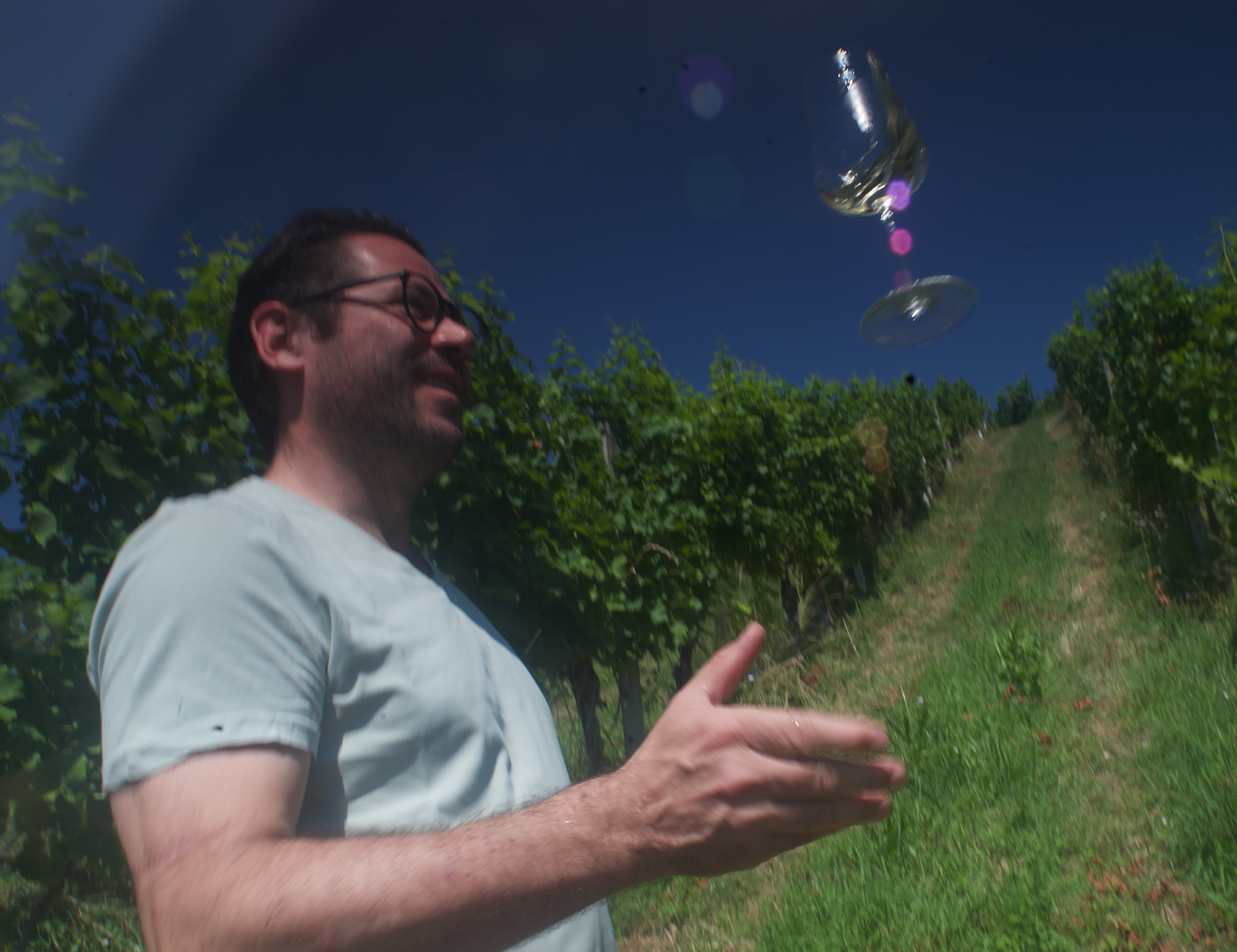
The wine industry has been discussing for 10 years now how alcohol-free wine can come as close as possible to classic wine. Yet a far more interesting field has long been opening up: new wines that do not want to dispense with alcohol entirely; wines with four, six or eight per cent alcohol; wines with provenance, fruit, acidity and a culinary purpose of their own. No proxies, no herbal infusions, no teas disguised as wine-like products. Wine, simply composed differently. Hannes Sabathi is one of the winemakers already pursuing this path. His Vind Blanc has 6.5 per cent alcohol by volume and is made from a regularly fermented base wine, grape juice and verjus. The low alcohol does not present itself as a deficiency. It is part of the concept. More about this wine in the major High-on-Low report, coming soon in WELT am SONNTAG.
The method initially sounds almost too simple. An existing wine is blended with unfermented grape juice and a small proportion of verjus. That is precisely where its enormous potential lies. Grape juice brings more than mere sweetness; it intensifies the grape’s intrinsic aromatics. It gives the wine back juice, fruit and volume without requiring alcohol to do so. Verjus is the juice of grapes harvested while unripe. It was used in European kitchens for centuries as an acidulant, long before lemons were universally available. In wine, it takes on a different task. It brings acidity, tart-fresh spice and that slightly dark, nutty contour that gives the grape juice structure and lends seriousness to the finished drink. Three familiar components produce not a diluted wine, but a new type of wine.
This method deserves far more attention because it fills a gap the market has left open for years. There is still remarkably little activity between alcohol-free wine and the classic twelve to fourteen per cent. Yet that is exactly where many guests are looking. They want wine with lunch, with a long menu, on warm days, before driving or simply when a second and third glass should not immediately make the entire evening an alcoholic one. Vind Blanc contains enough wine to be understood as wine, and little enough alcohol to permit a different way of engaging with it. It is not aimed at abstinence, but at moderation. This category is entirely absent from most ranges.
Why are more winemakers not doing this? It is hardly a technical issue. Grape juice is available, verjus can be produced without enormous investment, and suitable base wines are found in almost every cellar. The obstacle lies deeper. Many winemakers still regard anything below the customary alcohol levels as a downgrading. A wine with 6.5 per cent appears incomplete to them before they have even considered what kind of completeness it might possess. The industry is defending a norm that is historically young in any case. Forty years ago, numerous white wines were considerably lower in alcohol than today’s customary levels. Only ideals of ripeness, climate change and a market for ever more concentrated wines made twelve, thirteen or fourteen per cent seem self-evident.
Especially in a crisis, it would be negligent to leave these new possibilities untapped. Wine consumption is falling, young people are drinking less alcohol, the hospitality industry is looking for credible alternatives and proxies have gained ground precisely for that reason. The wine industry can win this market back without abandoning its identity. It simply has to stop measuring every new product against classic wine. A Vind Blanc is not intended to replace a twelve-per-cent Sauvignon Blanc. It can stand alongside it. One accompanies the afternoon, the other dinner, and a mature great wine the special occasion. An assortment becomes a contemporary offering for different situations.
The Winery of the Year 2027 therefore needs more than estate wine, village wine and grand cru. It needs alcohol-free wines, intelligently composed wines with six or seven per cent, and those classic bottles that are still allowed to mature. The future lies not in reducing wine, but in expanding it. Sabathi’s Vind Blanc shows how little is needed: a good base wine, good grape juice, verjus and the willingness to leave the familiar comfort zone. The market has long been waiting. Now winemakers simply have to start taking it seriously.