
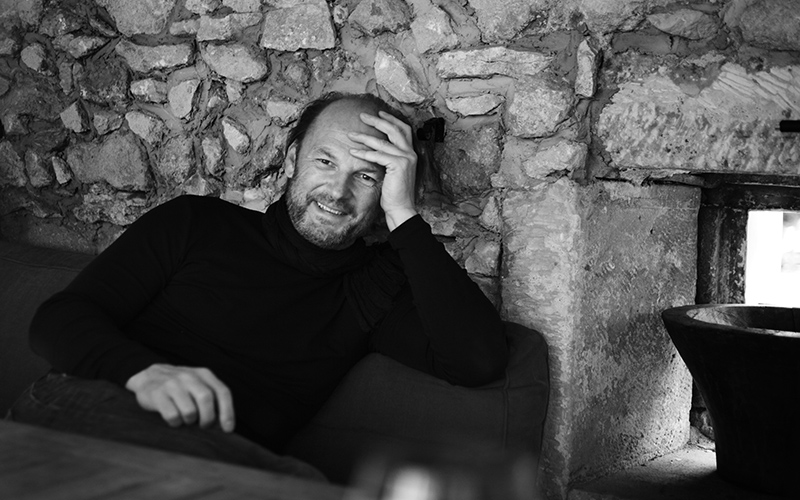
(Manfred Klimek)
The dispute surrounding top Austrian winemaker Roland Velich and his Lutzmannsburg 2023, which was awarded 100 points by James Suckling and nevertheless met resistance from official inspectors, initially appears to be a marginal footnote in viticulture. In reality, however, this case tells us something much bigger. It is about power. About the authority to interpret. And about that peculiar Central European administrative nomenklatura which still refuses to accept that quality is no longer defined exclusively by committees with decades-old notions of criteria.
Of course, viticulture needs rules. No one wants spoiled or faulty wines bearing state quality seals. But this is precisely where the problem begins: who actually decides what constitutes a fault? And more importantly: according to which cultural notions is that decided?
Roland Velich has for years been among Austria’s highest-rated winemakers internationally. His Blaufränkisch wines from Lutzmannsburg regularly receive top ratings from Parker and James Suckling and are counted among the most important flagships of Austrian viticulture worldwide. That is precisely why the current conflict is so perplexing. For this is not about some outsider operation or amateurish natural-wine activism. Here, a producer whose wines have long been counted among the world’s best is coming under pressure.
The international wine world has changed radically over the past twenty years. Acid-driven styles, spontaneous fermentation, reductive élevage, minimal intervention, oxidative nuances or deliberately angular aromatics are no longer regarded in many places as flaws, but as expressions of origin and personal signature. At the same time, some official tasting commissions still include people whose sensory conditioning dates from an era when wine above all had to be “clean”, agreeable and standardised.
The result is unpleasant.
Wines celebrated in London, New York or Copenhagen suddenly fail at national testing centres. And not infrequently because they do not fit into a sensory form from the late 20th century. More and more winemakers are now speaking openly about this – partly because the economic damage can be considerable. An internationally sought-after wine without an official quality seal suddenly appears like an outsider product, not only in its own country.
This culturally and commercially damaging problem is by no means confined to Austria. Germany has likewise known these conflicts for years – albeit in smaller numbers. There too exists a deeply rooted apparatus of inspection numbers, commissions and tasting panels whose self-image often still dates from an era when authorities believed they could administer taste.
German viticulture already suffers from almost chronic over-bureaucratisation. Hardly any other major wine country regulates, classifies, tests, monitors and standardises with comparable zeal. Much of this originally arose for understandable reasons: consumer protection, safeguarding of origin and quality assurance. Yet, as so often in Germany, a reasonable love of order developed into an administrative organism of its own, which at some point began to consider itself more important than the people for whom it had originally been created. The result is a wine sector that in many places is fighting international competition while simultaneously being permanently occupied with forms, testing criteria and bureaucratic mindsets.
And that is precisely why the political dimension is interesting.
In Austria, Sepp Schellhorn is now in government, a man who knows gastronomy and culinary culture not merely in theory, but understands them from day-to-day operations. One need not share every one of Schellhorn’s political positions to acknowledge that here, at least, someone is speaking who has genuinely experienced the reality of restaurants, producers and guests.
Germany, by contrast, has Julia Klöckner as President of the Bundestag – precisely a former German Wine Queen who was also once a political figure in the fields of agriculture and wine – without this ever having produced any perceptible cultural-political awakening for viticulture. It is almost tragicomic.
Yet viticulture today would need political voices that understand that quality is no longer exhausted by official tasting reports. The world of taste has become more open, more international and more pluralistic. Young consumers have long been less interested in official inspection numbers than in origin, credibility and personality.
That does not mean that every fashionable stuck fermentation suddenly has to be declared a cultural asset. Of course there are also bad wines, unclean cellar work and sensory nonsense. But that is precisely why we need inspectors with curiosity rather than mere routine. People who want to understand developments instead of reflexively rejecting them.
For the real scandal does not lie in a wine failing once. The real scandal lies in state systems beginning to systematically hinder aesthetic developments because their institutions remain intellectually trapped in another era.
And presumably something very Central European is revealed precisely in wine control: a deep fear of losing control. Great wine countries such as France or Italy often live more chaotically, more contradictorily, and sometimes more riskily. Germany and Austria, by contrast, have traditionally placed their trust in commissions, stamps and permits.
That works brilliantly as long as the world stands still.
Only, it no longer stands still.