
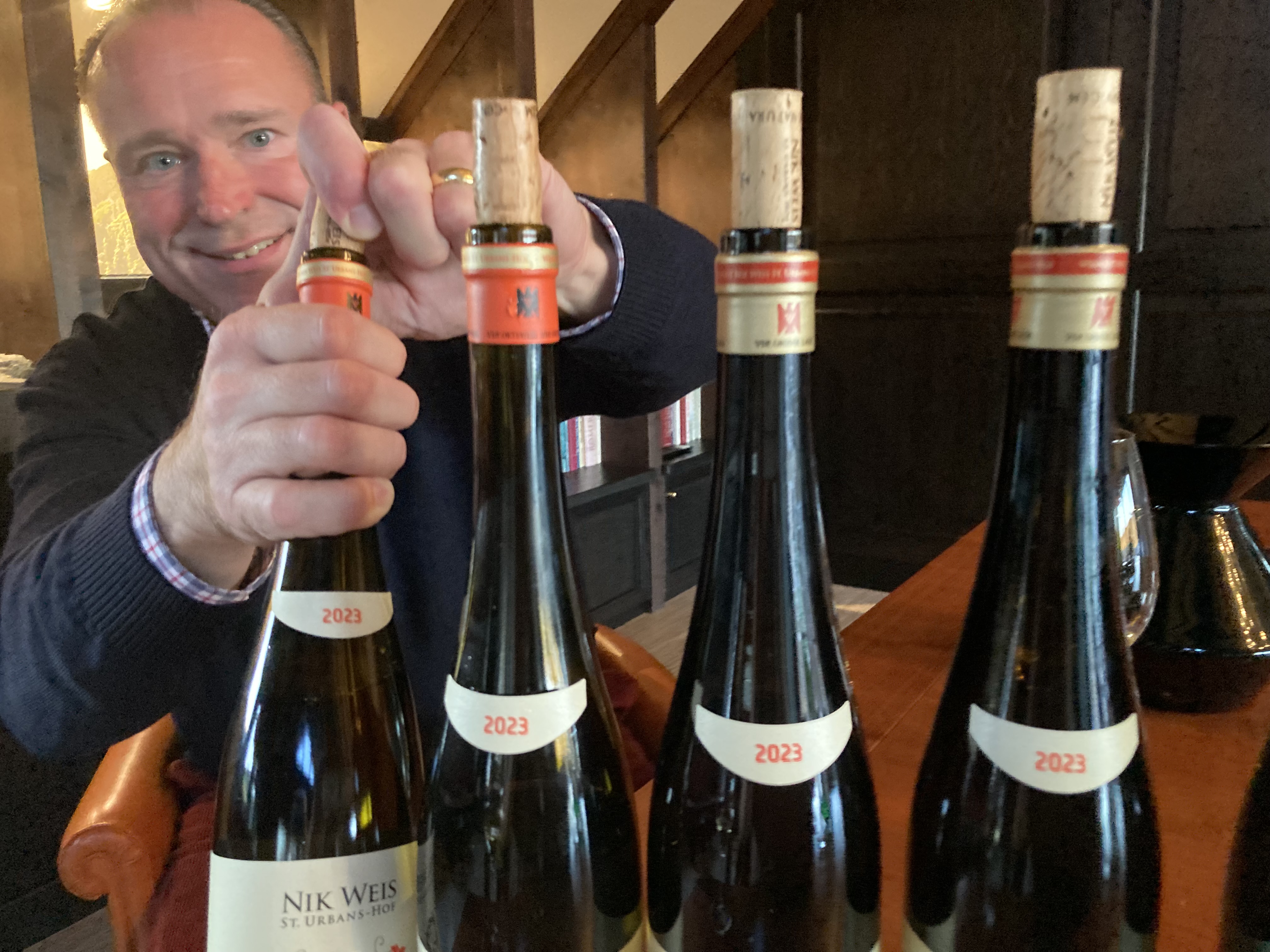
(Manfred Klimek / WELT am SONNTAG)
The wine world is coming to the end of the second year of its sales crisis, which is proving particularly difficult for red wine producers, as the everyday red wine that millions have taken for granted for years has been completely rejected by Generation Z and the millennials. Yet the crisis in viticulture is not affecting every region: quite the opposite, in fact. During my visits to the Austrian Wachau region and the Moselle, where I am currently writing these lines in an old wine-tasting room, met winemakers who, as long as five years ago, adopted astute and intellectually perceptive strategies to counter the upheavals that were looming at the time. Two of them are Nik Weis (Moselle) and Emmerich Knoll (Wachau). Both exemplify something that could revitalise the industry: the courage to transform (for change alone would not be enough) without losing one’s identity.
Neither was ever a ‘lifestyle’ winemaker; neither was ever one to get carried away with the social media hype. But both recognised the shifts in consumer behaviour. For whilst many winemakers – including some very renowned ones – are still trying to preserve their old, time-honoured winemaking traditions in new bottles, Weis and Knoll realised long ago that powerful GG Rieslings or heavy Wachau Smaragds belong to an era that is simply over.
The market now demands something different: delicacy, brilliance, energy, lightness – and yet grandeur, a powerful presence that is not driven by alcohol but by the art of orchestrating the extracts. These are precisely the five parameters that Weis and Knoll have now perfected. They have streamlined and refined their wines, yet without stripping them of their essence – thereby creating a minor cultural shift which, in hindsight, might one day be seen as a trailblazer. Perhaps even as a lifeline for a significant part of the entire German-speaking wine-growing world.
I’ll skip Nik Weis’s excellent estate Riesling and move straight on to his Riesling Mehringer Alte Reben 2024 (12% alcohol, €19.00): a Mosel Riesling that is brutally new and, with just one gram of sugar, brutally dry – a wine that, just ten years ago, would have been considered virtually unmarketable. A slightly ‘dirty’, wonderfully edgy wine: peas, kohlrabi and plenty of blue Mosel slate, vibrant, herbaceous, salty – and, in all its nuances, astonishingly charming.
Next came the Riesling Bockstein Großes Gewächs 2023 (12.5% alcohol, €48.00): a monument. Less of the slate’s saltiness, more fruit, but a solid foundation of cool, robust stone. Massive peach, accompanied by a hint of light smoke, a touch of shiitake, a hint of sandalwood. And then those maritime associations: iodine, seaweed, Brittany in force 5 winds, magnesia powder, chalk without lime. Almost a maritime wine – grown on the edge of the Saarland. A truly great wine!
Moving on to the Riesling Neuwiese 2023 (a Bockstein vineyard, 12% alcohol, €29.00): a Riesling from a series of single-barrel Rieslings that tastes as though someone had beamed the Mâcon region straight to the Moselle. 6 grams of sugar, a creamy finish, warm yeast, plenty of juiciness, plenty of allure. A wine that finally liberates the word ‘delicious’ from its banality. Burgundy in a slate-clad guise.
Finally, the Riesling Am Wasserlauf 2023 (12.5% alcohol, €29.00): another wine from one of the 1,300-bottle Slavonian oak casks. A hint of candyfloss, a very feminine profile, peach liqueur sweets, blue slate, quartzite, crisp fruit. Almost a perfume. A wine that flirts with me, plays with me. I drink the bottle almost dry.
There isn’t quite enough space today for the wines from Emmerich Knoll, so in 14 days’ time there’ll be more on this traditional Austrian estate, which has celebrated its 200th anniversary this year. But I do want to mention here the magnificent Riesling Smaragd Kellerberg 2024 (13% alcohol, €53.50): barren primary rock soil, cool breezes from the Danube. At first, the wine is astonishingly reserved, yet the way the Knolls have so delicately crafted the fruit is a testament to their great winemaking artistry: peach, apricot, quince, a hint of lychee, all working together in wafer-thin layers – incredibly light, incredibly good!