
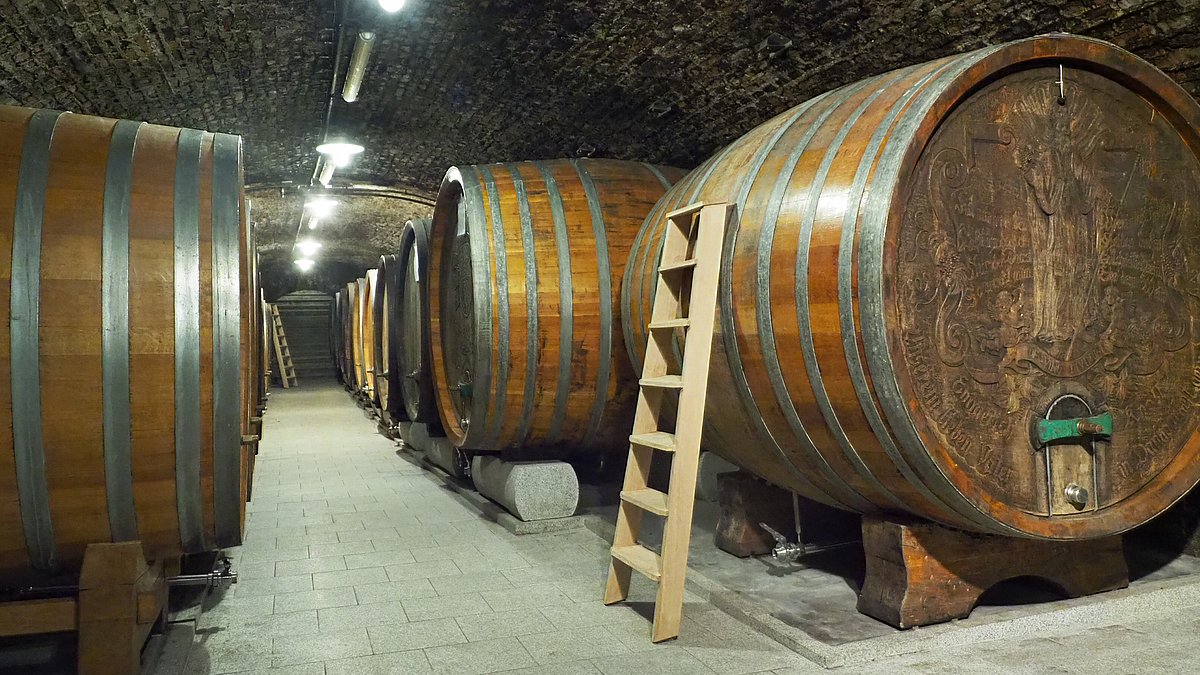
(Claude Auguste, photo: Vinea Wachau)
I remember my first Knoll wines exactly. It was in the 1990s; I was young, inquisitive, a South Tyrolean in Vienna studying “Jus” and perhaps a little too ambitious when it came to my young wine knowledge. Back then, when Austrian wine was still struggling for its international reputation, this bottle suddenly appeared on the table in the Beisl: a Knoll Riesling, Lagfe Schütt, Smaragd, 1989 vintage. I still remember taking the first sip – and immediately understanding that there was something different in the glass. Not fashionable, but modern – rather, something defined by a tranquillity that one rarely understands in youth. It was as if the wine were saying: “You can hurry as much as you like. I am here and I will remain here. For many years.”
Since then, I have been lost – or, to put it better: found. Knoll has always been an anchor for me. There are these wineries that you get to know once and never forget, because from then on they shape your own experience of taste. J.J. Prüm on the Mosel is one of them. Knoll in the Wachau is another. Both have this unmistakable signature: precision, austerity, and at the same time a seductive drinkability that surprises me anew every time.
The label – Saint Urban – almost put me off back then. At a time when every hip winemaker was trying to look graphically modern, Knoll stood with a Baroque image of a saint, suggesting a perhaps excessively religious background. Nonsense! Today, that is precisely what I love about Knoll. Well, at my age, conservative values receive more attention.
Of course, by now I also know the facts: around 15 hectares, half Grüner Veltliner and half Riesling, plus a little Muskateller, Traminer, Chardonnay and even Pinot Noir. Handwork on the terraces, maturation in large wooden vessels and stainless-steel tanks, no barriques, late bottling. Everything as it should be when substance is placed before fashion. But facts do not explain why I fell in love with these wines. It was this feeling: a glass of Knoll is like an appointment with eternity – the eternity one can come to know during one’s lifetime.
The vineyard sites have resonant names: Schütt – perhaps the most precise and radiant of them all. Kellerberg – aristocratic and profound. Pfaffenberg – cool and radiant. Kreutles – always a guarantee of Veltliner with juice and emphasis. Trum – small, spicy and largely unknown. I have drunk them all, often from different vintages, and they are like chapters of a single book. I realised: here, terroir is not claimed, but lived absolutely. And I recognise this terroir most dramatically in the vinotheque bottlings, the essence of the year’s best grapes, which do not come onto the market every year.
And then there is the subject of Federspiel. I have never understood how this category could fall out of buyers’ favour. Knoll Federspiel wines – especially the Grüner Veltliners – are among the Wachau’s best-kept secrets for me. At ten, fifteen, sometimes twenty years old, they develop a depth one would consider impossible. More than once, I have experienced an old Federspiel at the table outclassing the supposedly great Smaragds. This quiet greatness continues to delight me to this day.
Two hundred years of Knoll – that also means two hundred years of perseverance. Emmerich Knoll senior, whom I once had the privilege of meeting personally, shaped this style: grand, always with a touch of power, precise but never overloaded. Emmerich junior continues it – with a light touch, without rupture, but also without standing still. It is this fidelity to their own path that convinces me.
I confess: I need no new labels, no barrique experiments, no fashionable natural-wine gestures when I have Knoll in the cellar. To me, it is affordable, conservative luxury, a cultural asset in bottles. And when I look back today on almost four decades of a life with wine, there are only a few addresses that have accompanied me so reliably.
And yes: Anyone who finds themselves in Unterloiben should not merely taste the bottles, but also stop at the relatives’ inn. Apricot dumplings in the garden, with a glass of Federspiel – that is more Austrian than any ceremonial speech could ever express.
Knoll is not merely 200 years old. Knoll is timeless. And I am glad that I stumbled into that timelessness early on.