
(Manfred Klimek)
Before the train arrives in Freiburg, Baden, I need to complete my column from a fortnight ago with a few wines from the Domäne Wachau estate discussed in that column. Although the estate vinifies many more varieties to perfection – including some very rare white grapes such as Neuburger and Roter Veltliner – I am sticking with Austria’s best-known grape variety: Grüner Veltliner. For me, the Veltliner Federspiel Ried Kollmütz 2024 in magnum (1.5 litres, €25.00) is the best party wine with a sense of place this summer: fresh, spicy, with bite and substance – an easy-going jack of all trades. At €28.00, the Veltliner Smaragd 2024 from Ried Axpoint is a safe bet for a Veltliner that is not too peppery and spicy, but also elegant and Burgundian – one that, given a little air in the glass, really shows what Veltliner can do. The Smaragd Veltliners from the world-famous top sites Achleiten and Kellerberg (both €46.00) are precise, large-scale, expertly crafted Veltliners, made for impressive sips: without frills, fashionable intervention or any shortage of punch, they deserve more attention. Above all because we can leave them to mature in the cellar for years.
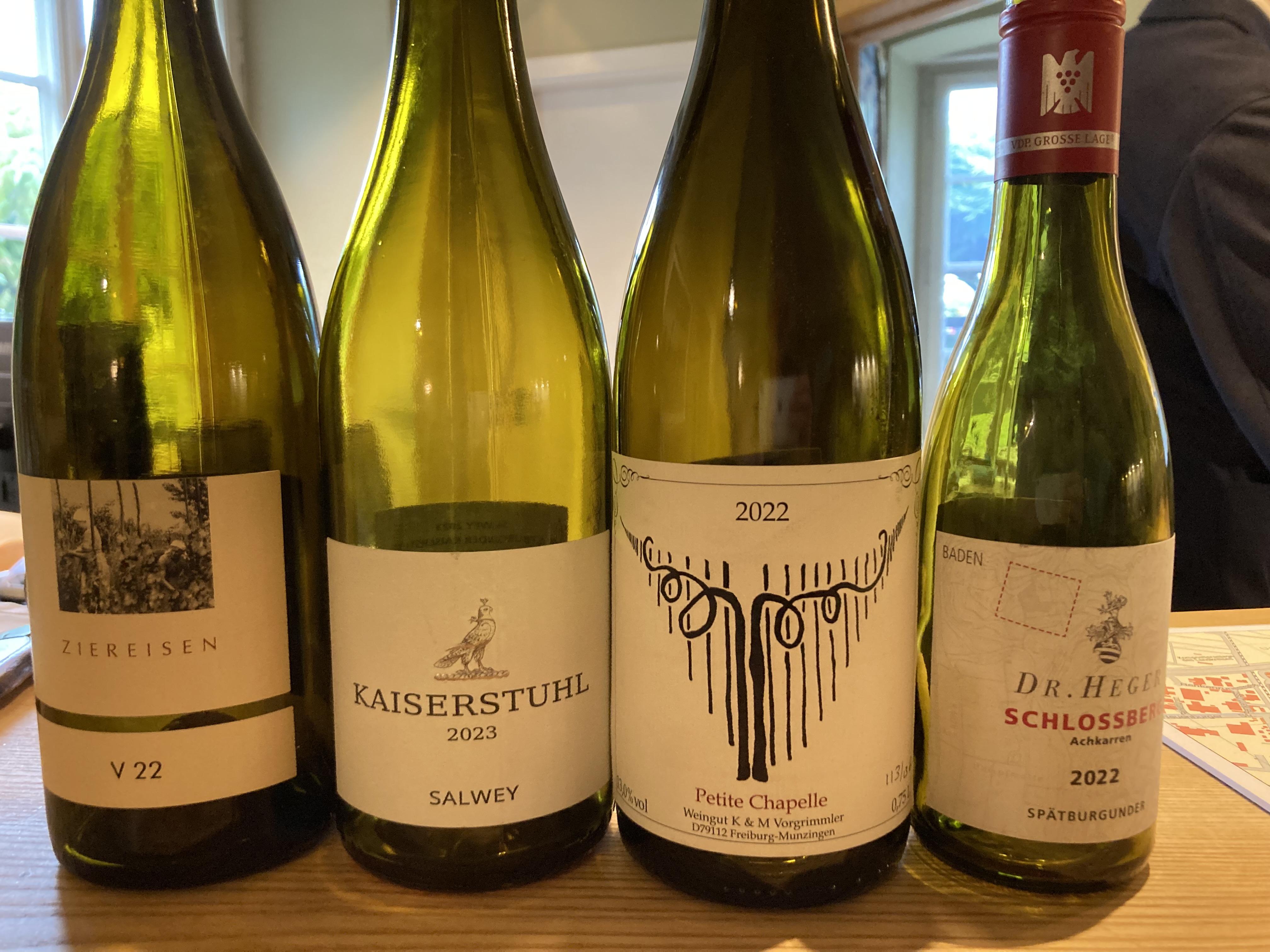
With these impressions on my palate, I leave Austria heading west. The Danube disappears, the landscape becomes narrower, opens out towards Tyrol, and the mountains recede. At some point, Basel, the Rhine and the Vosges appear outside the train window – and the Black Forest. I reach the Markgräflerland, that far south-western corner of Germany on the border with France and Switzerland, which is surprisingly little known to German wine consumers. Yet the Markgräflerland is a pub and wine-drinker’s paradise par excellence, whose carefree joie de vivre, expressed by the people who live here, offers a completely different image of the Germans so often branded as killjoys. It is a good and inexpensive place to live.
Understanding the Markgräflerland means understanding a grape variety that to this day we mostly call Gutedel. Yet therein lies the variety’s only problem, and that of its marketing, because Gutedel sounds like a package holiday, a club outing and that German wine culture which has been laboriously overcome over the decades. Internationally, the variety is called Chasselas. And it is currently one of Europe’s most interesting white grape varieties.
Chasselas is actually the great white grape variety of French-speaking Switzerland. That is why it is regarded in Switzerland as one of the continent’s finest terroir varieties. And yet German Chasselas is in some cases significantly better than its Swiss counterpart. The winegrowers of the Markgräflerland are becoming increasingly aware of this, too.
Aromatically, Chasselas resists every form of showmanship: no exotic fruit baskets, no intrusive primary fruit. Instead, pear, white flowers, pink grapefruit, a little mandarin, sometimes lime blossom, sometimes acacia. With increasing maturity, those fine notes of hazelnut and walnut emerge, which make great Chasselas into great white wines.
It is precisely this controlled neutrality of Chasselas that makes the variety so valuable. Even with more concentrated vinification, the wine retains a remarkable composure. It does not push itself in front of the food, but accompanies it: all kinds of fish, oysters, mussels, Asian dishes, herb-based cuisine, goat’s cheese and pale meat all benefit from precisely this quality – Chasselas enhances flavours rather than covering them up.
There is also something that is likely to become even more important in winegrowing in the coming decades: broad appeal, noble texture and drinkability at low alcohol levels. While other regions are currently feverishly searching for answers to the desire of many consumers for lighter wines, Chasselas has offered these qualities for centuries. I will now be reporting on this, and on the Markgräflerland, for several instalments.