
(Gerhard Retter / Editorial team)
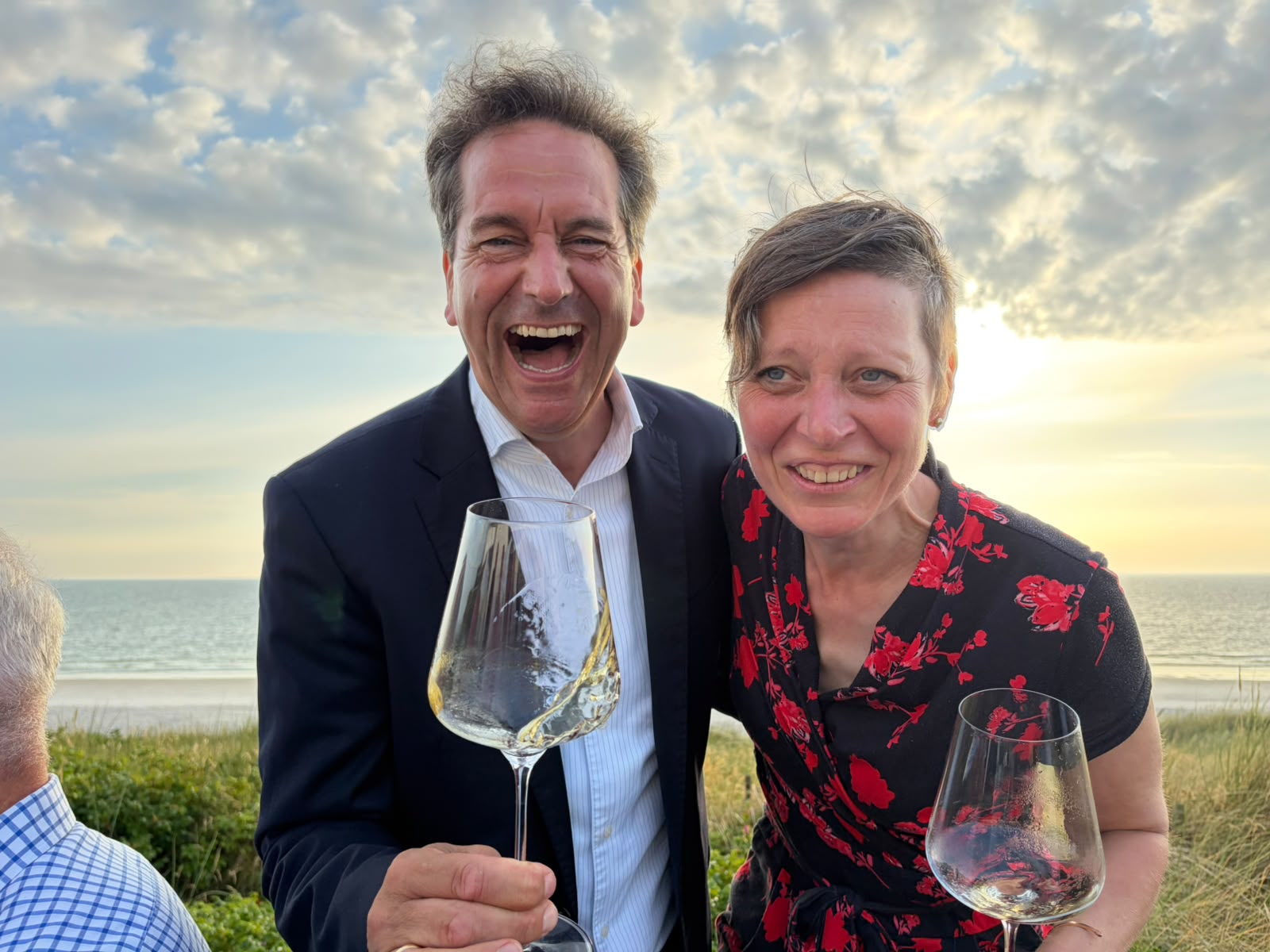
Sylt is not one of those places where we would expect Austrian fine wines. Outside, dunes, heathland and the North Sea define the landscape; inside, Jan-Philipp Berner has been cooking for years at a level that attracts attention far beyond Germany. It was precisely there that Österreich Wein invited guests to a large tasting. After a few glasses, however, the location no longer mattered. Good wines do not need home advantage.
The Söl’ring Hof possesses a pleasant air of self-assurance. No one there needs to prove how good the kitchen or service is. It begins with the first courses. Buckwheat biscuit with beurre noisette, salmon trout with potato and malt, Holstein beef tartare with Kiel sprat, beetroot with plum kernel and rose, squid with fennel and croustade – every dish was clearly conceived and precisely cooked. The produce was the focus. That was entirely sufficient.
Almost more interesting to me was observing the service. Anyone who has worked as a maître for many years automatically watches the things that happen between kitchen and guest. Routes through the room. Eye contact. The right timing. Topping up a glass at the appropriate moment. At the Söl’ring Hof, all of this happened with a calmness that cannot be rehearsed; it only develops when a team has grown together over many years.
Then the Austrian wines arrived.
Anyone who experienced the Austrian wine scandal of the 1980s still knows what journey this wine country had to make. Hardly any wine-growing nation has transformed its international reputation so fundamentally in such a short time. Today, Austrian fine wines are, to me, unquestionably world-class. Not because they would be the most expensive everywhere, but because they have found their own style. This applies to Grüner Veltliner just as much as to Riesling, Sauvignon Blanc, Chardonnay or Blaufränkisch. Austria has long since stopped needing to copy anyone.
The tasting began with Bründlmayer’s Blanc de Blancs Große Reserve Extra Brut 2014. Brioche, toasted hazelnut, candied lemon zest, chalk and a saline freshness formed an astonishingly cohesive picture. The maturity was fully integrated, the bead fine, and the acidity carried the wine far beyond the final sip. A sparkling wine that shows how naturally Austrian Sekt has now reached the international elite.
This was followed by Gross’s Gelber Muskateller Ried Perz from the 2021 and 2013 vintages. To this day, the grape variety carries the prejudice that it is mainly suited to uncomplicated summer wines. The 2021 showed elderflower, musk and white peach, but also possessed chalk, freshness and an astonishingly clear structure. This was not an aromatic package, but a serious single-vineyard wine.
The 2013 developed even more intriguingly. Chamomile, fennel seed, white tea and a touch of beeswax replaced the youthful fruit. But something else was decisive. For the first time, it was no longer the grape variety speaking, but the site. That is precisely where great wine begins for me.
With the Sauvignon Blanc Alter Kranachberg from Sattlerhof the tasting moved to southern Styria. The 2023 was crystal-clear, fresh and precise. Lime, whitecurrant, grapefruit and flint stood closely alongside one another without overshadowing each other. The wine still has many years ahead of it.
The 2017 showed what bottle age can achieve. The fruit receded. Chalk, herbs and salinity gained in importance. Suddenly, Sauvignon Blanc as a grape variety was no longer the focus; the Kranachberg itself was. A great single-vineyard wine can hardly achieve more.
With Johannes Hirsch’s Riesling Ried Gaisberg from 2023 and 2017, this development continued. Riesling is one of the most honest grape varieties of all. It hides no flaws. The young vintage brought white peach, apricot, lemon zest and flint, along with precise acidity that held the wine taut. Everything seemed young, clear and exceptionally lively.
The 2017 then showed why patience with great Rieslings is almost always rewarded. The fruit moved into the background. In its place came herbs, stone, salt and remarkable depth. With each sip, the wine became calmer and, at the same time, greater. That is precisely why it is worth not drinking great Austrian Rieslings too young.
With Vino Gross Iglič Furmint from the 2023 and 2016 vintages briefly shifted the tasting to another country, but not to another wine landscape. Štajerska is politically in Slovenia. In viticultural terms, it has belonged for centuries to the cultural region that seamlessly adjoins southern Styria. Vines know no national borders. Neither do soils and climate.
The 2023 showed citrus fruit, white peach, apple skin and chamomile, together with a fine tannic structure that gave the wine additional tension. Furmint can sometimes have an almost austere character. Here, it seemed controlled and exceptionally elegant.
The 2016 was clearly further along. Quince, honeycomb, dried herbs, a touch of smoke and flint defined the picture. With each minute, the wine gained depth without losing freshness. It is precisely mature Furmints such as these that show the potential of this grape variety.
After that, two Chardonnays from Kollwentz were poured. Gloria has been one of Austria’s great white wines for years and has long needed no comparison with Burgundy. The question of whether an Austrian Chardonnay tastes Burgundian is really outdated. Good Austrian Chardonnays today taste above all of their origin.
The Gloria 2023 showed white peach, lemon zest, fresh almonds and fine chalk. Everything seemed concentrated, but never heavy. The fruit remained clear, the oak held completely back, and the wine possessed the salinity one expects from the Leitha Mountains.
The 2016 was already playing in a different league. Hazelnut, beeswax, brioche, warm stones and dried herbs continued to develop with every minute. What impressed most was less the aromatics than the wine’s inner calm. Nothing pushed itself forward. Everything had found its place.
With the Grüner Veltliner Smaragd Ried Achleiten from Domäne Wachau two vintages of one of Austria’s most significant sites were poured. Achleiten has a signature that remains astonishingly consistent over decades.
The 2024 showed apricot, pear, white pepper, fennel seed and citrus zest. Youth, freshness and precision defined the impression. The wine is still right at the beginning of its development.
The 2020 Late Release was entirely different. Chamomile, hazelnut, herbs and warm stone defined the picture. Four years of bottle age had taken nothing from the wine; instead, they had brought it into order. That is precisely why patience is worthwhile.
With Fritz Wieninger’s Grand Select Pinot Noir from the 2022 and 2015 vintages brought Vienna into focus. That a capital city of a million people produces wines of this quality remains remarkable. The 2022 showed sour cherry, cranberry, violet and sandalwood. The oak remained discreet, the fruit fresh and cool. A Pinot Noir that does not define itself through power.
The 2015 confirmed how beautifully Austrian Pinot Noir can mature. Forest berries, truffle, black tea and dried rose petals defined the aromatic profile. The tannin was fully integrated and carried the wine through to a long finish.
With the Cuvée G from Gesellmann came two wines I had been particularly eager to taste. The 2015 possesses power, concentration and plenty of substance. Dark berries, cedarwood, dark chocolate and spices came together in an impressive whole.
The 2012 seemed even more complete. Black cherry, graphite, cigar box, truffle and fine spices stood in a balance that only mature red wines achieve. Nothing sought attention. That was precisely why this wine remained in the memory for so long.
With Paul Achs’ Blaufränkisch Altenberg from the 2022 and 2016 vintages brought the tasting back to Burgenland once more. Blaufränkisch is one of those grape varieties that, with some maturity, truly begins to show what it can do.
The 2022 presented dark cherries, blackberries, violets, graphite and juniper. The tannin was fine, the fruit cool and precise. Everything suggested that this wine still has many years ahead of it.
The 2016 had already lived through those years. Black tea, tobacco, dark cherry, a touch of graphite and remarkable calm defined the impression. The wine seemed completely at ease with itself. Bottles such as these make clear why Blaufränkisch is now considered one of Europe’s most exciting red wines.
The tasting concluded with Gerhard Kracher and two Welschriesling Trockenbeerenauslesen, the 2022 vintage and the 2006 Library Release from the “Zwischen den Seen” series. Great sweet wines are often described by their sugar content. That does not go far enough. The acidity is always decisive. It carries the wine, keeps it fresh and prevents any heaviness.
The 2022 showed apricot, yellow peach, candied orange peel, saffron and acacia honey. Despite its enormous concentration, the wine remained astonishingly light on its feet. The sweetness was present, but never dominant.
The 2006 was entirely different. Dried apricots, dates, figs, beeswax, black tea and fine spices defined the picture. What impressed me most, however, was the freshness. After almost twenty years, the wine still possessed a vitality that many young sweet wines lack.
The food pairing was also among the strongest achievements of the afternoon. Huchel’s Alpha with summer blossoms and spruce shoots, brown crab with summer vegetables and mint, Arctic char with radishes and roast potato, onglet and calf’s head with celeriac and tarragon, and apricot with caramel, cashew and Tagetes minuta accompanied the wines with remarkable precision. The kitchen never attempted to outdo the wines. It gave them space and gained expression precisely through doing so.
After several hours, numerous flights and many mature vintages, one realisation above all remained with me: Austrian fine wines need time.
Young vintages often impress immediately. They possess freshness, precision and energy. After several years in bottle, however, their inner order changes. The fruit recedes somewhat, the origin becomes clearer and the texture calmer. It is precisely at this stage that many of these wines begin to show their true greatness.
I am Austrian. Precisely for that reason, I tend to take a critical view of Austrian wines. Patriotism is no substitute for quality. That afternoon, nobody needed to assert or explain anything. The wines spoke for themselves.
Their value for money is also remarkable. Anyone looking for great white and red wines today will find qualities in Austria that ought to command considerably higher prices internationally. Wachau, Kamptal, Kremstal, Wagram, Traisental, Vienna, Burgenland, southern Styria, western Styria or Vulkanland – hardly any other wine country offers comparable variety in independent origins across such a small area.
My thanks go to Österreich Wein, all the participating winegrowers, and Jan-Philipp Berner, Bärbel Ring and the entire team at the Söl’ring Hof. This afternoon impressively demonstrated how naturally great cuisine and great wines can come together when both sides are prepared to hold back.