
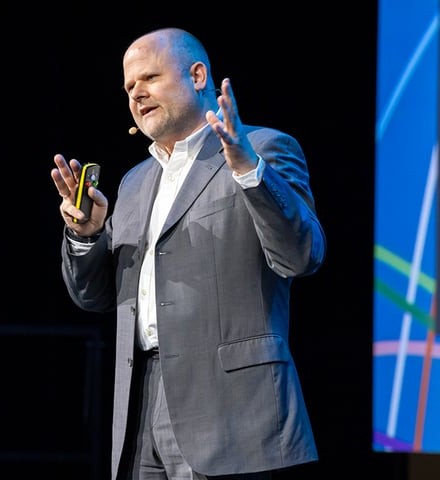
(Nikolaus Skene)
Sometimes you fancy a white wine.
Sometimes a red.
And after exercising, a beer is also something rather fine.
No one would think of ordering everything at once at exactly that moment.
No sommelier in the world would say: “No problem, I’ll bring you white wine, red wine, beer, a steak, a towel, a massage, a phone call with your mother and, as a precaution, a skiing holiday.”
Our brains are considerably more efficient at this.
They decide contextually. Situationally. In an energy-saving way.
They activate only those regions that are currently relevant. The rest remains “quiet”.
And this is precisely where there is an often-overlooked difference between human and present-day artificial intelligence.
And now ChatGPT enters the picture.
At its core, ChatGPT works differently.
Whatever you happen to fancy – it always asks for everything.
Not just the beer after exercising, but the beer, the white wine, the red wine, the steak, the recipe, the supply chain, the CO₂ footprint, the wine region, the sport and the philosophical meaning of thirst, all at the same time.
The reason we do not notice this:
It happens extremely quickly.
The pointless “regions” are screened out within milliseconds, and in the end a reasonably sensible answer emerges. But the computational effort behind it is gigantic.
The human brain would be completely overwhelmed in this form.
And that is precisely why the electricity consumption of today’s AI systems is a serious point of criticism.
DeepSeek is already taking this one step further.
It attempts to “fire” different parts of the model in a more targeted way, depending on what is probably relevant at the time. Not everything, always, simultaneously. But more selectively. More context-sensitively.
And then comes HuggingGPT.
HuggingGPT is not a new model.
It is an architectural concept.
The core idea:
A large language model such as ChatGPT is no longer used as a universal genius, but as a controller. As a conductor. As a planner.
It listens to the user, understands the intention – and then breaks it down into concrete subtasks.
These subtasks are not solved by the same model, but are specifically passed on to specialists : image models, audio models, classifiers, text-to-speech systems, object recognition, segmentation. All models that already exist, for example in the Hugging Face ecosystem.
What matters here is not only what is done, but in what order.
HuggingGPT plans dependencies.
Some tasks have to be processed sequentially, while others can run in parallel. Results from one model are used as input for the next. Only at the end does the controller gather everything back together and formulate an answer.
A simple request such as “Describe this image in detail” is automatically broken down into image classification, object recognition, segmentation, captioning and visual question-answering models – and only then brought together.
This is not new intelligence.
But it is a different way of working intelligently.
And this is where HuggingGPT becomes really interesting:
The system does not scale through ever larger models, but through coordination. Through selection. Through division of labour. Through context.
Suddenly, AI no longer looks like an overwhelmed universal student who has to be able to do everything at once, but like a well-organised team.
It still “squeaks” here and there: higher latency, dependence on the controller’s planning ability, token limits, instabilities. HuggingGPT is not a finished product. It is a conceptual model.
But one that points towards an important direction:
Away from “bigger, faster, everything at once”.
Towards “the right thing, selectively, efficiently”.
And with that, back to electricity consumption. One of the justified main criticisms of today’s AI is its hunger for energy. If intelligence no longer arises from maximum parallelism, but from targeted orchestration, we may be approaching a more efficient form of machine thinking.
What this means in the long term – including for human work, human intelligence and human relevance – is another discussion.
For another Saturday.
Today, one observation is enough:
There needs to be more hugging again.
Not everything at once.
But the right thing, at the right moment.
(Nikolaus Skene lives and works in San Francisco, advises companies on AI and has been organising tours to Silicon Valley and other hot spots of technological development for several years