
(Editorial team)
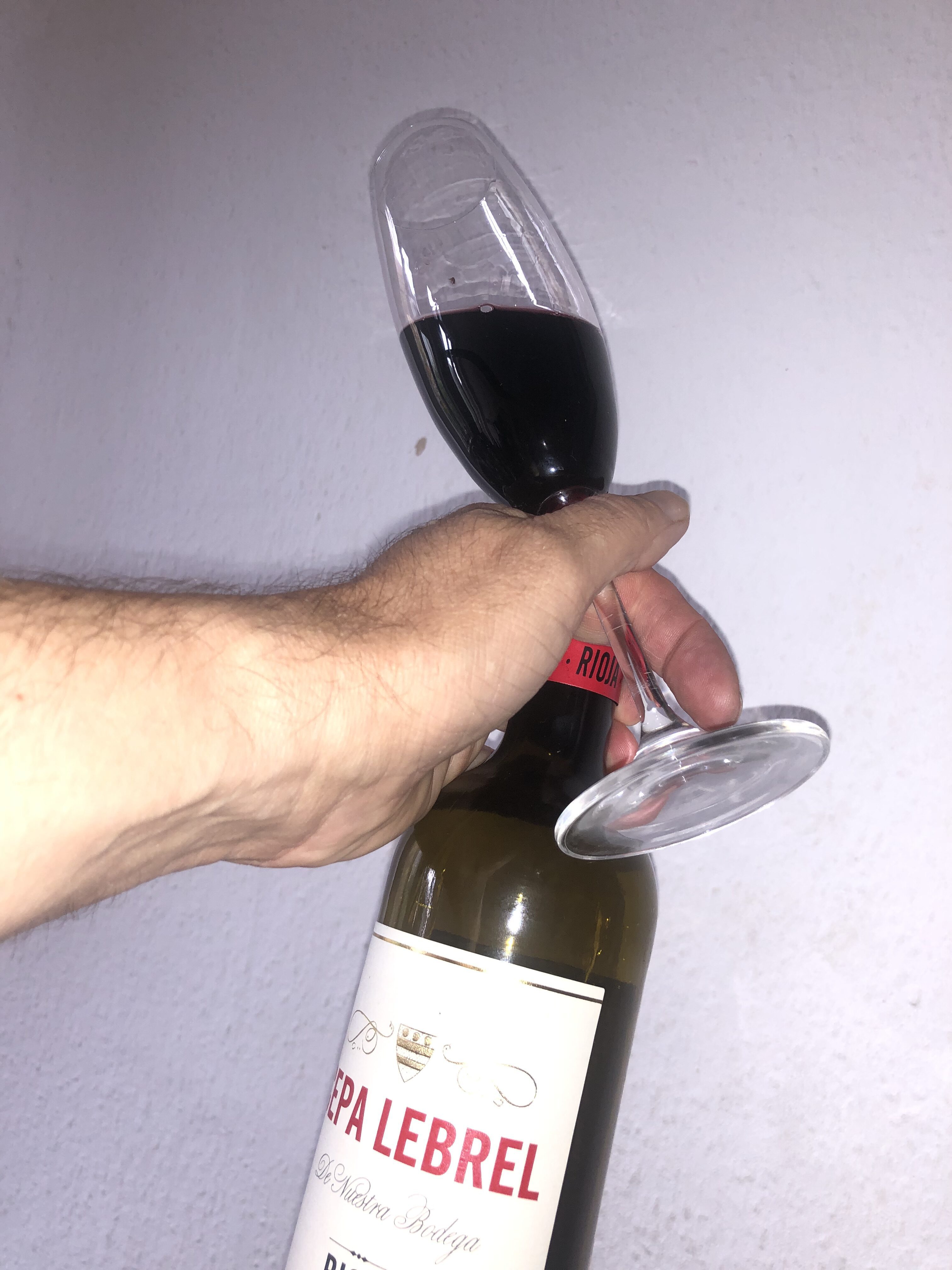
There are stupid, but instructive experiments. Right at the top of this discipline: drinking red wines from sparkling wine glasses. We did it, because it all began with the saying: Great wines explain themselves from any glass. Even from a sparkling wine glass, the maximally wrong glass – slender, pointed, built for bubbles, not for tannin. An affront to everything the glass gurus, Riedel popes and sommelier schools preach. And precisely for that reason, so delightfully off-base. And yet, it did produce results.
For behold: It was precisely the cheap wines from the supermarket that benefited. They seem denser, more concentrated, downright serious. Suddenly multi-layered on the nose, almost poetic. Cassis, cherry, flint – everything pushed right to the fore. Anyone who would otherwise have scoffed at “primary fruit” is dumbfounded. In the right glass, they were thin, well-behaved little drops. In the sparkling wine glass, they briefly play in a different league.
The great ones, by contrast – the classics, the mature wines, the wine libraries – go miserably under. Bordeaux? Burgundy? Everything that needs elegance, balance and quiet nuances is mercilessly mashed by the sparkling wine glass. Finesse becomes fruit soup, complexity becomes concentrate. It is as if you locked Maria Callas in a telephone box and said: “Sing!”
Five bottles, five small truths:
- Cepa Lebrel 2020, Rioja, Lidl – Cassis straight from the chemistry set, cherry, plus a spark of flint. In the sparkling wine glass, the wine seems bigger, thicker, louder. In the Riedel Tempranillo glass, it was merely well-behaved and not very surprising. Here, suddenly: a powerhouse. But without a hint of elegance.
- Corte alla Mura 2020, Chianti Riserva, Lidl – an exception. In the glass, nut, herbs, mint, smoke. Surprisingly elegant on the palate, almost charming. In the Chianti glass, not all of that remains, but remarkably much does. Here, the sparkling wine glass may stay – a strange reconciliation.
- Chapoutier St. Joseph “Les Clos” 2020, Rhône – mulberry, cassis, salt. Everything in capital letters. On the palate like a stone that the tongue first has to turn around before it will even agree to be wine. Grand in the balloon glass. In the sparkling wine glass, a punch in the gut.
- Chasse-Spleen 2005, Bordeaux – what a vintage, what a disappointment. Decanted, hoped for, tasted: nothing. In the sparkling wine glass, the wine remains simplistic, duller than one could ever imagine. Blueberry, chocolate, cassis – three notes, repeated dully. Not Bordeaux, more the soundtrack of a children’s television series.
- Bordeaux Supérieur 2023, Lidl – and once again, the punchline: cheap wins. Cassis, a light hazy and leather note, small herbal notes, everything suddenly large and fully present. In the Bordeaux glass, it was student plonk. In the sparkling wine glass, it is almost noble.
The conclusion? Glasses are not accessories; they are torture instruments. The wrong glass does not merely kill wines, but also decades of cellar work. It turns Lidl into Lafite and Lafite into Lidl. Exaggerated? Perhaps.
The sparkling wine glass exposes – the unnecessary. It shows that the great names can lose their aura when forced into the wrong setting. And that the little ones suddenly put on airs when staged in the wrong vessel.
So yes: the experiment was stupid. Because no one drinks red wines from a sparkling wine glass. But it was a slap in the face to us here, who believed that great wines somehow explain themselves in any glass – absolutely not. And so we learnt once again: the real reality of wine ultimately arises not in the vineyard, but in the right glass.