
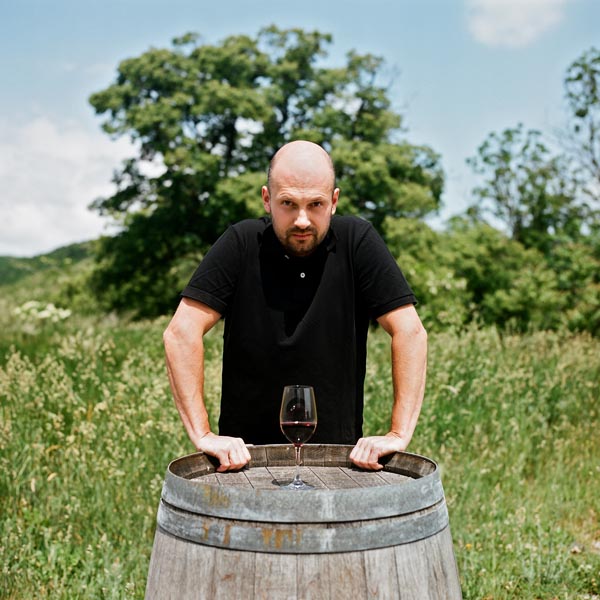
(Manfred Klimek / Photo: Thomas Schwarz, Kloster am Spitz – a man of modernity)
It is noticeable. Not scientifically – that remains to be done. Not representative. But noticeable enough to give it some thought. Whenever I write about low-alcohol or dealcoholised wines, the sharpest objections come almost exclusively from men. Mostly from my generation. Sometimes somewhat younger. Rarely under forty. Almost never from women. The accusations are remarkably similar. That it no longer has anything to do with wine. That it is a betrayal of a culture thousands of years old. That it is marketing. That it is capitulation. The tone is less reminiscent of a tasting than of a culture war.
Yet it is no longer about quality. The quality of the new products in the wine world has improved dramatically in recent years. Modern processes now recover many aromatic compounds from the alcohol and return them to the low-alcohol wine. A product of renunciation has become a new wine category. Those who deny this are no longer tasting. They are defending an idea. Perhaps this is precisely where it is worth looking beyond wine. The automotive industry is currently experiencing something similar. For many men, the internal combustion engine is far more than a technical system. It stands for freedom, control, performance and a particular self-image. The electric car is therefore not merely debated in technical terms. It is fought over culturally. Wine is similar. For some, alcohol is not merely an ingredient of a drink. It is part of an idea of masculinity, enjoyment and self-assurance. Whoever touches that is touching their self-image.
This does not mean that men are fundamentally more conservative drinkers. But they more often defend those rituals with which they grew up. Women often seem to approach this more pragmatically. Many today drink more consciously, would like to enjoy a glass of wine at lunchtime without becoming tired afterwards, or are looking for alternatives to the classic twelve- or thirteen-per-cent wine for a long evening in a restaurant. There is rarely any ideology behind this. Most of the time, it is everyday life. This is precisely where the wine industry’s real failure begins.
For decades, the industry was remarkably strongly oriented towards a male-dominated ideal: great red wines, high alcohol levels, maximum concentration, as much extract as possible. Even many white wines became increasingly full-bodied. What was once considered lean suddenly appeared incomplete. Yet female consumers had long since changed. They did not want less quality at all. They often simply wanted less alcohol. For a long time, the wine industry listened to the louder voices. And those were often men. Yet women today are among the most reliable purchasers of high-quality food and drinks of all. In many households, they decide what is bought, take an interest in provenance, sustainability and health, and are often more willing to try new products without prejudice. This very group was surprisingly long underestimated in the development of new wine styles.
Yet this is not at all about replacing classic wine. Great Rieslings, mature Bordeaux or mature Blaufränkisch or Spätburgunder will retain their place. No one is calling for their abolition. But why should a modern winery not just as naturally produce a convincing wine with six or seven per cent alcohol? Why should a dealcoholised Sauvignon Blanc be taken less seriously than a rosé or a Pet Nat? Wine has always been most successful when it has created new occasions.
That is very probably why we are not currently experiencing a generational change, but a cultural change. The question is no longer whether a wine contains twelve or zero per cent alcohol. The question is whether it gives pleasure. Whether it goes with food. Whether we would like to order a second glass. The market decides everything else. And perhaps the men of my generation in particular should allow themselves to consider one thought. Almost everything we now take for granted was once considered sacrilege in wine: temperature control, stainless-steel tanks, screw caps, biodynamics, Orange Wine, natural wine. Today, hardly anyone argues about them any more.
So why not also below six per cent alcohol? Not because classic wine is disappearing. But because the world of wine has grown larger.