
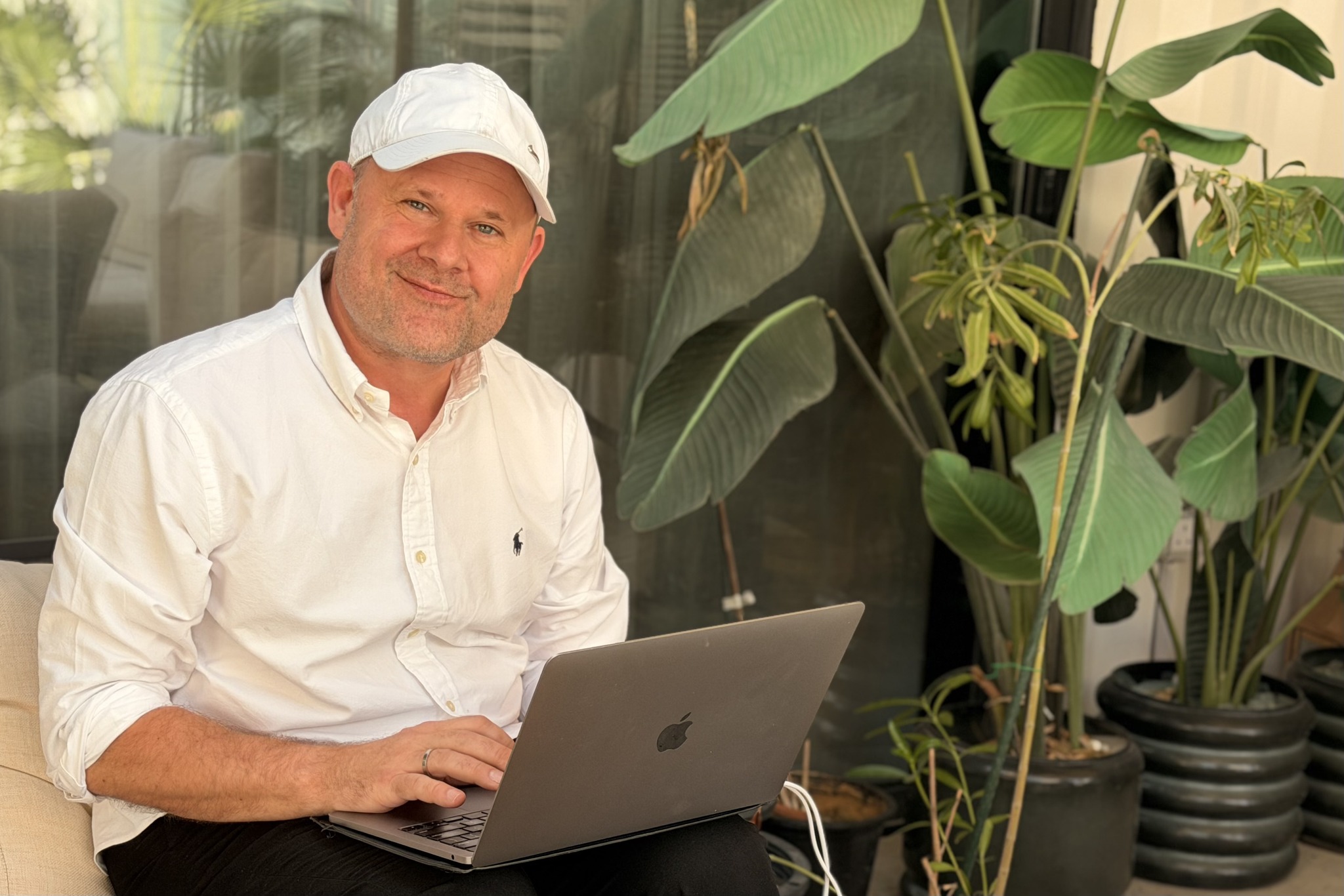
(Nikolaus Skene)gfdgfg
It is a sentence that I now frequently hear in conversations all over the world: “I would rather speak to people than to AI” An addition often follows, such as: “I need real human interaction.” That sounds understandable – and yet it falls short. Functionally, this sentence is more akin to statements such as: “I would rather speak to Italians than to French people” or “I prefer talking to colleagues from my industry.” It is a preference, not a truth.
Because today, alongside the human population, a second layer exists: a digital conversational infrastructure consisting of billions of models. Nat Friedman calls it “AI Atlantis” – a kind of new civilisation that is accessible at any time and can reflect thoughts from countless perspectives. It does not feel and has no body, but it can think with us. And it does so more quickly and broadly than human communication can.
Those who say “I would rather speak to people” often mean something else: the concern that this new form of interlocutor might trigger something one does not yet understand. This nervousness is understandable. Nevertheless, a fundamental question arises: Why should one limit oneself to just one kind of conversation partner? When we want to explore a thought in greater depth, we usually speak to different people – friends, experts, critics, chance acquaintances. Why should the greatest new thinking capacity of our century, of all things, be left out?
People and AI are not alternatives, but complements. There are considerations that need warmth – and others that require distance. For some topics, a human perspective is indispensable; for others, a precise, impartial analysis is helpful. AI does not replace the human element, but it expands the space in which we can think.
AI Atlantis is not a replacement for relationships, but a new continent of perspectives. Every technological watershed has brought forth new conversation partners: books, libraries, universities, and later the internet. AI is the first infrastructure that actively talks back – not perfectly, but not silently either.
The crucial question, then, is not whether we should speak to AI, but whether we deliberately want to limit our own landscape of thought. Conversations with AI replace nothing, but they can create depth where routine prevails, and breadth where we are stuck. They can contradict us where we expect confirmation, and sometimes show us how narrow our own patterns have become.
“I would rather speak to people” is an understandable feeling, but not a viable argument. We already live in a time in which humanity and digital systems think together. Not better, not worse – but clearly differently. AI Atlantis is not a replacement for humanity. And AI should never be anthropomorphised. But is AI is an invitation to think bigger. And having more perspectives has never done any harm.
About the author
Since 2012, Niki Skene has organised strategy tours and fact-finding missions to innovation regions such as Silicon Valley, New York, London, Tel Aviv, Dubai and Shenzhen/Hong Kong. On 213 of these tours, he conducted more than 3,000 conversations with people working on the technology of the coming decades. Previously, Skene was a TEDx Ambassador and Faculty Coach at Singularity University for six years, where he developed a deep understanding of exponential change dynamics. www.siliconvalleyinspirationtours.com