
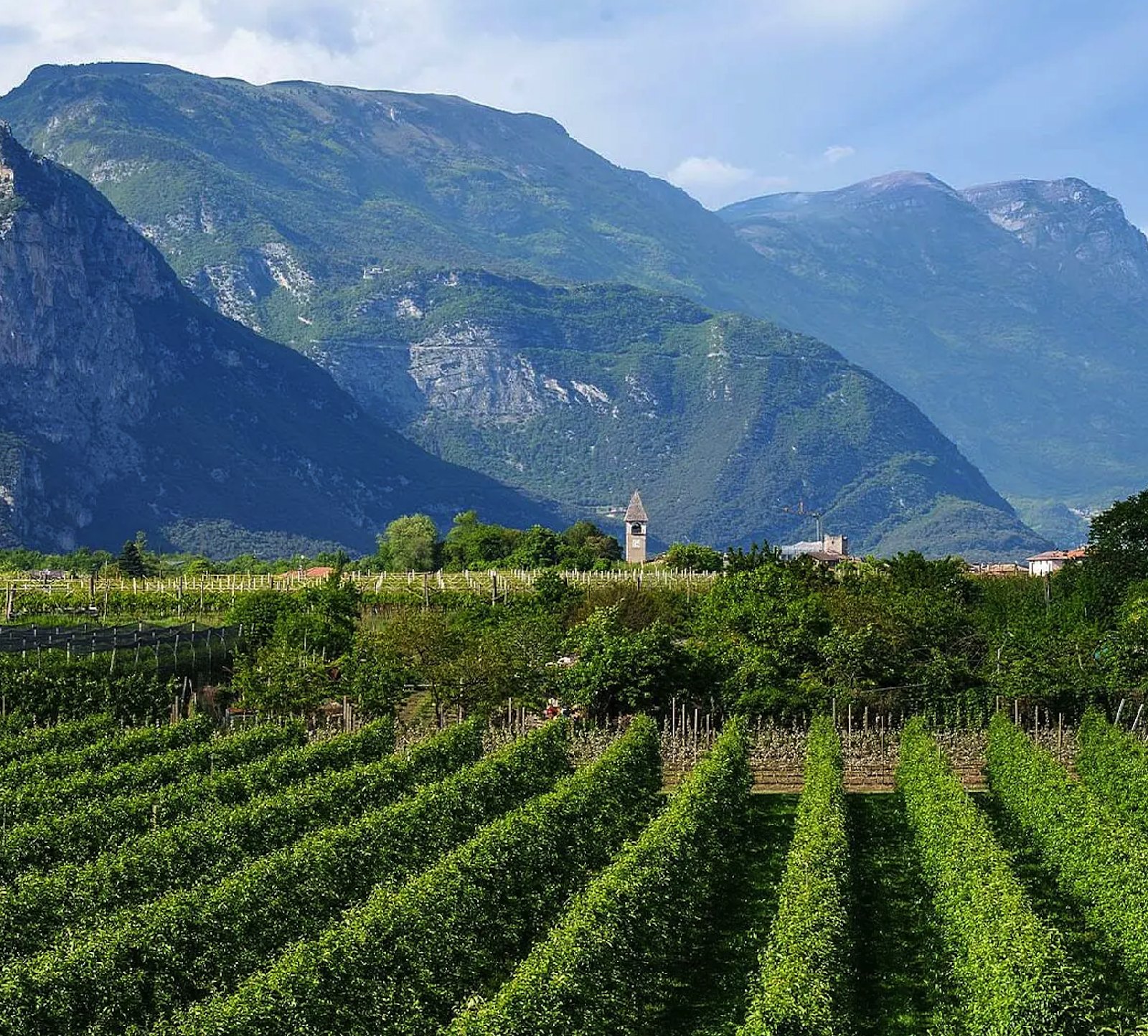
Germans like travelling to Italy. Especially to my home on Lake Garda. They love my country, its cuisine, its landscapes and the idea that life there is fundamentally more pleasant than at home—which is true. Italians sit in beautiful squares, drink wine at their leisure, eat pasta and take time for the important things. That, at least, is how the German holidaymaker sees it. The fact that Italians themselves also have to work, pay their bills and occasionally be in a thoroughly bad mood is not part of the tourist programme. Italy has been a promise to Germans for decades. And because promises are happily bottled up on holiday, a remarkable market has developed around certain Italian wines. Lugana is one of them. Primitivo is another. And for a long time, so was Nero d’Avola. Three names that have made a career for themselves on German wine lists and supermarket shelves that many much more famous wine regions can only dream of. They sound of the South, of sunshine, holidays and a certain degree of connoisseurship. Anyone ordering Lugana has apparently heard of Lake Garda and Valtellina. Anyone drinking Primitivo knows at least that Apulia is somewhere on the Italian boot. Nero d’Avola, meanwhile, has that exotic ring which makes an ordinary bottle of red wine seem more interesting simply through its pronunciation. The astonishing thing is that these wines owe a considerable part of their international fame to an audience that expects one thing above all when buying wine: as much Italy as possible for as little money as possible.
We should not despise German wine drinkers for that. After all, they have every right to shop economically. The matter only becomes interesting when one looks at what their preferences have done in the regions of origin. Wine is an agricultural product whose production requires long-term decisions. Anyone planting a vineyard today hopes that, in forty or fifty years’ time, there will still be people who want to buy their wine. And anyone orienting an entire region towards the tastes of a particular export market is taking a gamble whose risks only become visible when those tastes change. Take Lugana. The designation of origin covers the area south of Lake Garda, between Lombardy and Veneto. The main grape grown is Turbiana, a variety related to Verdicchio that can certainly produce characterful wines. Good Lugana wines have pleasant acidity, mineral tension, fine, occasionally almondy aromas and astonishing ageing potential. There are excellent producers. No one needs to apologise for a great Lugana. Its commercial success is based largely on an uncomplicated, agreeable white-wine style that neither overwhelms the palate nor places an excessive burden on the wallet. A little fruit, sufficient freshness, hardly any rough edges. Add a name that sounds pleasantly Italian and can be sold by a German restaurateur without any major explanation. Its geographical proximity to Lake Garda does the rest.
The economic consequences are impressive. Since the early 2000s, the vineyard area of the Lugana DOC has grown by around 270 per cent. Today it covers approximately 2,600 hectares, with production standing at about 27.5 million bottles a year. More than 60 per cent is exported, and Germany is the most important foreign market. Land became expensive, new vineyards were planted, existing businesses expanded and substantial sums were invested. Lugana became one of Italy’s most successful white-wine brands. The word brand is entirely appropriate here, because many German consumers buy Lugana without being particularly interested in which winegrower produced it. The designation of origin itself is the product. It guarantees a particular expectation of flavour, an Italian origin and a price considered reasonable. Presumably, very few know that the wine is made specifically from Turbiana. Nor are they particularly interested. Allow a small wickedness: if a similarly uncomplicated wine made from Müller-Thurgau were put in a German bottle, the enthusiasm would probably be limited. Müller-Thurgau sounds provincial, like a club house and the wine selection of an inn whose menu has not changed significantly since 1987. Lugana, by contrast, sounds like a terrace in Sirmione. Yet a carefully made Müller-Thurgau can certainly provide more pleasure than an inconsequential Lugana. Its price is usually lower. Which apparently creates an additional problem. German wine drinkers have developed a remarkable inferiority complex. They want to drink something special, preferably from abroad, preferably with a name their neighbours do not know, and preferably at a price that allows them afterwards to consider themselves particularly clever buyers. The wine should seem international. The bill should remain German.
This development is even more apparent with Primitivo. The grape variety comes from Apulia (probably originally from what is now Croatia), is genetically identical to California’s Zinfandel and can produce remarkable red wines under suitable conditions. In Manduria and Gioia del Colle in particular, there are old vineyards and producers who make Primitivo wines with distinctive character. The best examples possess structure, depth, a certain wildness and that savoury freshness which is easy to overlook in the variety when one knows only its commercial representatives. Germany is primarily familiar with the other version. It must be dark, soft, rich, high in alcohol and preferably sweet-tasting. The fruit often recalls stewed plums, the tannins are not supposed to bother anyone, and the acidity is expected to remain politely in the background. These are wines that convey their origin above all through warmth and ripeness. Some taste as though someone had tried to make a red wine that would also appeal to people who do not actually like red wine. Then there are names and labels that trade on Mediterranean joie de vivre, old vines and mysterious family stories. The actual history of the family concerned is occasionally of secondary importance. What matters is that the customer gets the feeling of having acquired, for eight or nine euros, something that would have to cost at least thirty if it were Bordeaux.
Primitivo has thus occupied a place in the German wine trade once held by other uncomplicated red wines. A decently made Dornfelder could satisfy many of the same needs. It, too, is dark, fruit-driven and can be made soft and agreeable. It simply lacks a Mediterranean backstory. Its name sounds like a German grape breeding, a winegrowers’ co-operative and a beverage served to relatives with Sunday roast in the Kohl era. Primitivo, by contrast, promises the piazza, the sea breeze and an Italian grandmother who has been cooking the same tomato sauce for forty years. Initially, this demand was a blessing for winegrowing in Apulia. A region that had long supplied large quantities of simple wines and blending material was able to market its own grape varieties and designations of origin. New bottling facilities were established, existing wineries modernised, vineyards upgraded and additional areas planted with Primitivo. International demand created income and prospects. That was genuine economic progress. The limits of the model are now becoming apparent. In Manduria, producers are complaining about gigantic stocks and inadequate grape prices. The protection consortium has responded to the risk of overproduction by suspending the registration of additional Primitivo areas for the designations of origin concerned until 2030. At the same time, lower yields, production limits and measures to stabilise the market are being discussed. The fact that bottling figures have partly risen again recently offers grape producers only limited help as long as they receive too little money for their harvest. This is an uncomfortable situation for a region whose economic hopes rested for years on the success of a single grape variety.
We should not simplify the causes too conveniently. The international wine crisis has many causes. Changing drinking habits, higher costs, falling purchasing power, a difficult export market and a general move away from high-alcohol red wines are combining. Germany is by no means solely responsible. But the German market, with its enormous demand for inexpensive Primitivo, encouraged a development that is now proving risky. When an origin becomes successful primarily through a particular taste and a particular price, there is little room for manoeuvre once demand declines. There is also a problem that is discussed surprisingly rarely in the wine industry: most commercially successful wines are interchangeable. This applies to a large proportion of Lugana production as well as to inexpensive Primitivo. The claim that more than 90 per cent of these wines are inexpressive mediocrity cannot be proved statistically in any serious way. As a tasting experience, however, it is by no means implausible. Anyone who regularly works their way through the shelves of large German wine shops and supermarkets encounters an impressive quantity of technically sound, agreeable and entirely forgettable wines. They have no serious faults. They also frequently have nothing else that one might remember the following morning. And that is precisely where the economic problem begins. A wine that sells mainly on price and easily understood flavour can be replaced at any time by another. The customer is loyal to the product as long as it meets their expectations. They are rarely loyal to the winegrower. If the wine becomes more expensive, they look for a cheaper one. If the taste changes, they look for another origin. And if they decide to drink less alcohol in future, the bottle disappears from their shopping trolley altogether. The investments remain. Vineyards cannot simply be folded up and put into storage.
Nero d’Avola tells a somewhat different story. This Sicilian grape variety, too, was marketed for a long time as an uncomplicated, full-bodied and inexpensive red wine. For German buyers, it was an attractive alternative to the usual Italian suspects. Lots of fruit, dark colour, plenty of sunshine, an exotic name. Sicily had the additional advantage that most people possess a rough idea of what it looks like. The wine therefore hardly needed any further explanation. Yet Nero d’Avola deserves a more differentiated assessment. Sicily has undergone a remarkable qualitative development over the past few decades, and some of its most interesting winegrowers have proved, precisely with this grape variety, that it can do far more than the German supermarket would suggest. Feudo Maccari, for example, is among the producers that take Nero d’Avola seriously with its Saia. The 2023 Saia was awarded three glasses by Gambero Rosso. Duca di Salaparuta also received this highest accolade from the Italian wine guide for its 2020 Duca Enrico. Such wines possess a structure and individuality that have little in common with the widespread image of the soft, everyday Sicilian red. Feudo Montoni is particularly interesting. Fabio Sireci farms vineyards in the mountainous interior of Sicily, some at altitudes of 800 to 900 metres. There, Nero d’Avola wines are produced whose freshness, comparatively restrained colour and fine aromas contradict the usual notions of the variety. His Vrucara is one of the notable interpretations of this origin. Sireci long resisted the fashion for over-extracted, particularly dark red wines. Today, his persistence seems distinctly modern. COS in south-eastern Sicily and Gulfi, with its different Nero d’Avola origins, are also among the estates that have made the variety’s qualitative potential visible far beyond the mass market. With Gulfi, one can even trace how differently Nero d’Avola can taste on different soils and in different sites. An insight that the average German special-offer shopper is presumably quite indifferent to, but which could be crucial to the future of Sicilian wine culture. For a grape variety known only as a cheap wine has a problem. A grape variety whose finest representatives convey distinctive quality and origin, by contrast, possesses a future that does not depend solely on price.
This does not mean that all Italians should produce great, expensive wines in future. The world needs good everyday wines. It even needs very many of them. But it does not always need larger quantities of interchangeable wines whose only competitive advantage is that they cost a few cents less than the bottle next to them. European integration gave these developments additional momentum. Open markets, common trading rules, international distribution structures and the enormous reach of large retailers made it possible to market regional wines in quantities that would previously have been scarcely imaginable. Italian winegrowers and German consumers benefited equally from this. Jobs were created, businesses modernised and regions that had long stood in the shadow of Italy’s famous winegrowing areas were economically upgraded. Yet the globalisation of the wine trade has an unpleasant characteristic: it often rewards the expansion of production more quickly than it warns of its risks. As long as demand rises, every additional hectare appears sensible. Every new winery is a sign of progress. Every investment is justified by the growth figures of previous years. The question of whether this development remains economically viable if the most important export market suddenly buys less is conveniently postponed until later. Later has now arrived.
In Italy, production limits, set-aside schemes and grubbing-up are being discussed. However, it would be wrong to infer from this that the Lugana vineyards in particular already need to be grubbed up on a mass scale. So far, the appellation has shown remarkable stability. Primitivo also continues to sell in substantial quantities. The problems lie above all in economic dependence on large markets, in price formation and in the question of whether the existing production structures can be maintained over the long term. For some businesses, the answer will be uncomfortable. Anyone who has relied on rising volumes for years and must now accept falling revenues cannot pay for their investments with Italian joie de vivre. The banks demand euros in Apulia too. Nevertheless, it would be unfair to look for the responsibility solely among the winegrowers. They produced what the market demanded. German importers wanted inexpensive, agreeable wines with an attractive origin. The trade wanted reliable volumes. The hospitality sector wanted names that could be sold without the need for explanation. Consumers wanted the feeling of drinking something special for little money. Each participant acted rationally from their own perspective. Together, they created an economic structure whose long-term viability depended on a surprisingly optimistic assumption: that Germans would continue drinking Lugana and Primitivo indefinitely.
This assumption also contains a cultural contradiction. Germany itself has a remarkable wine landscape: Riesling, Silvaner, Pinot Blanc, Pinot Noir and numerous other grape varieties produce wines that also enjoy high international recognition. Yet for some part of the German public, it seems more attractive to buy a mediocre wine from Italy than a good one from their own region. Southern provenance gives the drink a social added value that quality alone apparently cannot provide. One might regard this as a harmless quirk. After all, people also buy Italian shoes, French perfumes and English clothing without having to feel guilty about it. With wine, however, this preference takes on particular significance because it changes agricultural landscapes. A fashionable grape variety requires land. Land requires capital. Capital demands sales. And sales require people willing to buy the product for years. Through their longing for inexpensive Mediterranean sophistication, Germans helped to redirect entire wine regions economically. They enabled winegrowers to prosper, triggered investment and made designations of origin known internationally. They certainly deserve recognition for that. But they also favoured a business model whose greatest strength lies in selling large quantities and whose greatest weakness is exposed precisely where those quantities are suddenly no longer needed.
The interesting question is therefore what comes after Lugana and Primitivo. Will German wine drinkers switch to other Italian designations of origin as soon as they offer the next attractive proposition? Will they discover Spanish Monastrell, Portuguese red wines or some previously little-noticed grape variety from Greece? The European wine industry has enough regions hoping for such a boom in demand. And enough investors prepared to finance it. Or will something genuinely change? Could the decline in wine consumption also bring a new appreciation of quality, origin and individuality? Could people drink less but choose more consciously? Could a wine cease to seem interesting merely because its name sounds like a holiday and its price like a special offer? That would be a welcome development. So far, however, there is little reason to regard it as inevitable.
Ultimately, the story of Lugana and Primitivo is about a misunderstanding that is widespread in the international wine trade. Commercial success has been confused with cultural significance. An origin sold millions of times suddenly counts as important. A grape variety found in every supermarket is declared an international classic. The figures confirm the success. They say little about quality. The best winegrowers in these regions have no problem with that. They do not need mass-market taste to justify their existence. A great Nero d’Avola from Feudo Montoni or Gulfi will remain interesting even if German supermarkets reduce their Sicilian special offers. An exceptional Lugana will find its admirers because it is exceptional. And a serious Primitivo from old vines need not apologise for the fact that millions of bottles of uncomplicated red wine are sold under the same name. For the remaining businesses, a more difficult period is beginning. They must discover what their wines are worth when demand for inexpensive Italian joie de vivre declines.
And the Germans? They will continue travelling to Italy. They will sit by Lake Garda, swim in Apulia, eat pasta in Sicily and enjoy the quality of the food. They will continue drinking wine. Hopefully, good wine. They should occasionally ask themselves just one question: why an average wine from Italy is often worth more to them than a good one from Germany. The answer probably has less to do with wine than with the image they would like to have of themselves.