
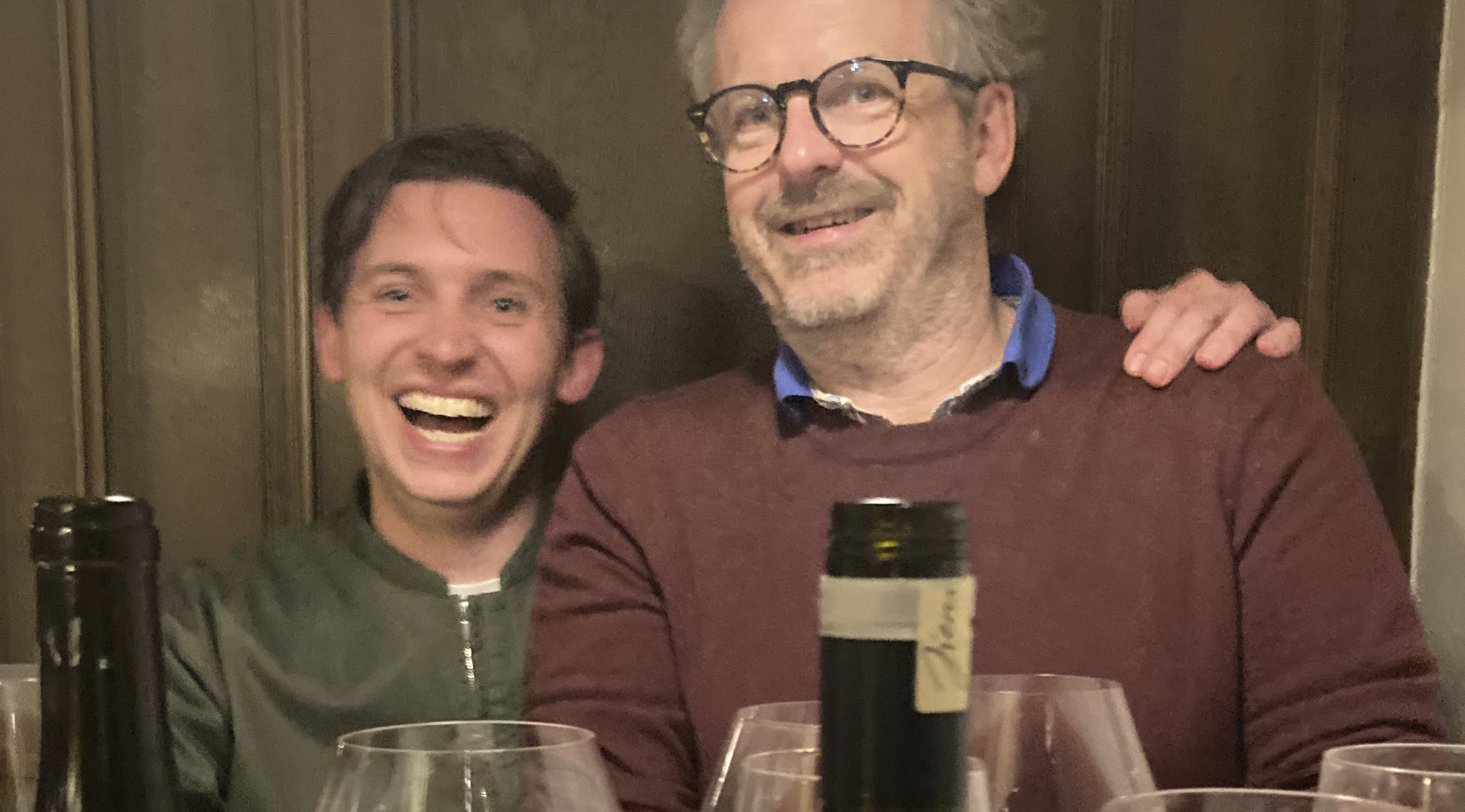
(Manfred Klimek / WELT am SONNTAG)
German wine drinkers know their traditionally prized wine-growing regions: the Moselle, the Rheingau, the Roter Hang in Rheinhessen, the extensive and multidiverse Palatinate, the beautiful slopes near Radebeul outside Dresden and, to some extent, Baden too – above all the enormous Kaiserstuhl vineyard hill. Yet deep in Germany’s far south-west, not a few kilometres below the Kaiserstuhl and wedged between France, Switzerland and the Black Forest, lies a wine-growing region that has little in common with the traditional image of German viticulture: the largely unknown Markgräflerland. The Black Forest sends cool air into the vineyards in the evening hours, the Upper Rhine stores the warmth of the day, and Alsace is often just a few minutes’ drive away – and yet the wines there taste fundamentally different from those on the German side of the Rhine
The reason for this difference is the Markgräflerland’s leading white grape variety: Chasselas. No grape variety is better suited to our times: moderate alcohol levels, fine floral aromas, often accompanied by hazelnut and almonds, together with an unfailing drinkability on the palate.
The Blankenhorn winery in Schliengen also marks the absolute south-westernmost tip of German viticulture – a few minutes’ drive and you are at the Swiss border. On the other side of the border, in Switzerland, a few interesting winemakers also make wine, but after that viticulture quickly comes to an end.
At Blankenhorn, they demonstrate in massively impressive fashion the potential this region holds. Since Martin Männer took over and shaped the estate from a family share (including a spectacularly beautiful new building with plenty of space and a professional kitchen for gastronomic events), the work here has been carried out with great consistency. No wine is banal or fashionable; no wine tries to chase trends. The cellar is ultra-modern, and the cellar master, Christoph Fischer, is the kind of introspective tinkerer who has found in Martin Männer a boss who knows precisely that this tinkering also needs freedom: a freedom he must continue to finance even in economically challenging times such as these. The Blankenhorn team’s signature is defined by precision, patience and a remarkable analytical understanding of what wine is meant to achieve today. And it is a signature that makes itself felt through the fact that the estate’s winemaking culture incorporates the factor of recognisability. In other words: Blankenhorn wines leave enough flavour and aroma to be recognisable as Blankenhorn wines at any time.
Even the village wine Schliengen-Chasselas 2024 (€13.50) proves that great drinking pleasure needs no overblown gesture: apricot, a hint of bay leaf, a little meadow herb, immensely delicious on the sip. The Erste-Lage Chasselas “Schlienger Kirchberg Le Clocher 2022” (€22.50) gains in depth and salinity without sacrificing its playful elegance. That is precisely where its greatness lies, and the greatness of the cellar master, who gives the wines a kind of pop-cultural relevance – wines like earworms somewhere between the Beatles and Oasis.
The Grosses-Lage Chardonnay from the Sonnenstück (2021 vintage, €35.00) also displays that controlled power one encounters ever more rarely today – and additionally proves how elegantly restrained the use of oak can be. Weight on the palate, but not a gram of excess weight. The 2021 Cabernet Sauvignon–Merlot “Postillon” (€42.00) is a curious, utterly successful Bordeaux from Germany, making it clear: we can do this too – even if nobody gives a damn. Particularly impressive, finally, is the Crémant Réserve Brut Nature (€35.00), which after 72 months on the lees develops a precision rarely experienced at this price point – recognisably German sparkling wine with an unmistakably cosmopolitan style. It is hard to do better.