
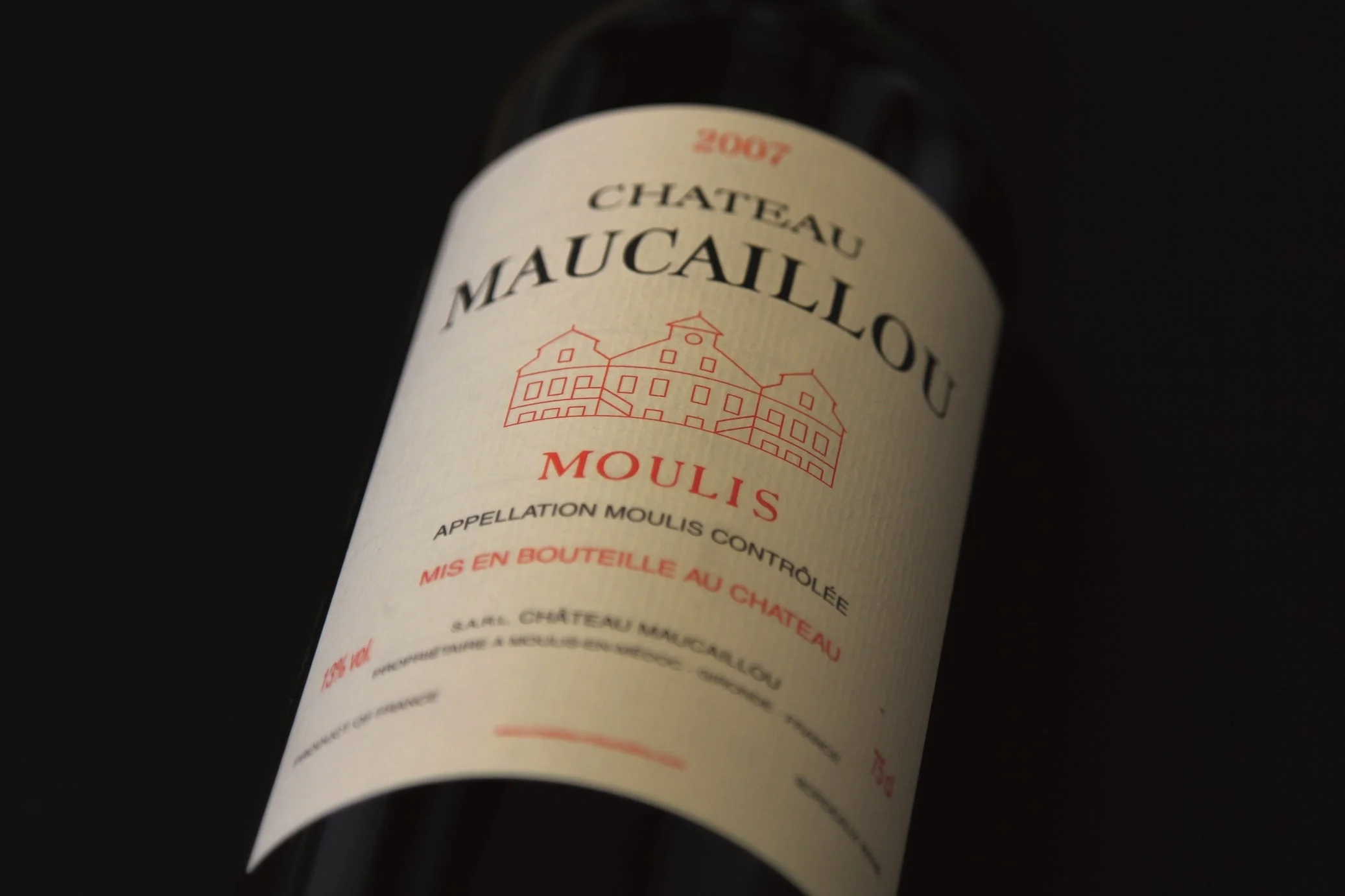
(© Dourthe Freres)
by Manfred Klimek
I got to know Château Maucaillou when I bought 60 bottles from the 1982 and 1985 vintages at auction – at the auction of the bankrupt commodities futures trader Kernstock in Vienna. Everyone was only interested in Lafite, Latour, Margaux, Mouton and Petrus, which Kernstock also had lying by the crate in his cellar. No one called for the 60 bottles of Maucaillou. I raised my hand, almost as a joke, and won them for a price that was a textbook bargain. Only at home, when I tasted them for the first time, did I understand what I had actually bought: one of the most delicious deals of my life.
Maucaillou – the name means “bad stones”. And that is precisely its terroir: gravelly, inhospitable soils that yield little besides grapes with character. Here in the Médoc, in Moulis-en-Médoc, the estate was founded in 1875. A newcomer compared with the venerable grands crus that had been included in the famous 1855 classification twenty years earlier. Maucaillou arrived too late. That is why it never appeared on this list, which to this day determines prices and prestige. And that is why nobody called for Maucaillou when Bordeaux descended into price madness in the 1990s and 2000s. Maucaillou, however, always remained “just” a Cru Bourgeois Supérieur. And out of focus.
Yet the estate has been delivering for more than five decades exactly what one wants from a dependable Bordeaux: structure, substance, a touch of classicism, but none of the pretence. Wines that are easy to drink, that one is happy to pour another glass of, that do not become tiring by the third bottle. In short: the perfect quaffing wine from the Bordelais.
The Dourthe family has been running the château for generations. Today, it is Philippe and Pascal Dourthe who are in charge – and they do so with a winemaking approach that seems almost old-fashioned. No flashy PR campaigns, no constant presence on social media, no marketing racket. Maucaillou communicates little, sometimes almost too little. Even the question of exactly how they define their viticulture – sustainable, conventional, biodynamic? – remains in the shadows. It suits the character: better to let the bottle speak for itself than to label every measure. But it also means that it is not “hip”.
The vines – predominantly Cabernet Sauvignon and Merlot, with some Petit Verdot – cover around 80 hectares. The wine is made traditionally: temperature-controlled fermentation, malolactic fermentation, ageing for up to 18 months in barriques, around 20% of them new. No experiments, no capers. The result is wines that can rely on their strengths: elegance, fine tannins, a Bordeaux that is dependable.
And that is perhaps the greatest twist: While all around it the hunt for points, hype and rising prices rages, Maucaillou has remained what it has always been – a good Bordeaux at a reasonable price. Anyone looking for an “ordinary” wine in the Bordelais encounters something rare here: normality that is not banal.
I still remember the first bottles I pulled from the cellar: 1982, 1985 – great vintages. They did not have the lustre of a Premier Cru, nor the international prestige that electrifies collectors. But they had something one cannot value highly enough: drinkability, depth, a measure of balance that was exactly right. A wine that does not need to talk about itself because it convinces in the glass.
Perhaps that is what defines Maucaillou: this wine is the antithesis of spectacle. It shows that Bordeaux consists not only of rarities and investment vehicles, but also of wines that can show greatness in everyday life. At a time when many Bordeaux houses – amid the greatest red-wine crisis in 60 years – are trying to elevate themselves ever further, Maucaillou remains grounded. And that is precisely why it stands out.
Anyone who drinks Maucaillou, understands that “ordinary” in the best sense also means “dependable”. And that sometimes it is wiser to buy a case of it than a bottle of Lafite. Not because Maucaillou would be greater, but because, without knowing it, it is listening to the pulse of the present day.