
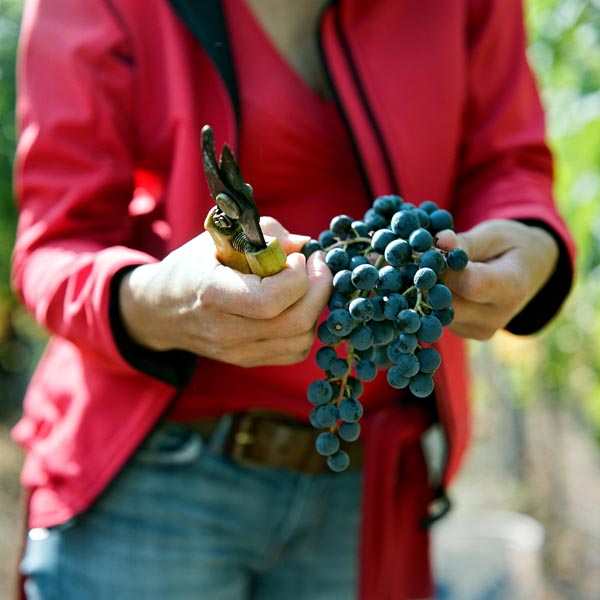
(Willi Klinger / Oberösterreichische Nachrichten / Wineparty)
Last-minute Advent season: It is cold and gets dark early outside even without snow. Ideal conditions for a cosy evening with a warming meal and a good bottle of red wine. This is how I always imagine seasonal nirvana, whether the scene is set in misty Piedmont, at home in the countryside or in a cosy restaurant in the city. Sometimes, however, I feel like a model that is on its way out when I see merry people getting stuck into Aperol Spritz and snacks at aperitivo until their taste buds and gastric nerves gradually lose their appetite for a proper meal. A well-known restaurateur on the scene recently let slip on the radio that his guests happily “forget” about their reservations at other restaurants while at aperitivo. In this permanent party atmosphere, the territory for fine red wine is shrinking like the habitat of the grey partridge.
Red wine is not a party drink
However, I do not understand why the wine scene constantly acts as though people used to be born with a sommelier gene, whereas today’s young people, the much-discussed Generation Z, have no interest in wine. Successful restaurateurs with a focus on wine contradict this: young people drink wine according to the principle that “less is more”. Quality matters, not quantity, and this is where red wine falls short. It is not only young people who prefer the cool, fresh and sparkling variants, white and rosé, to the mostly bland, room-temperature red wine on offer in affordable restaurants. They are also more digestible than the many manipulated entry-level reds to which – entirely legally – oenological tannins (astringents) of various aromatic profiles are added to round them out, providing more vanilla sweetness, or gum arabic for a soft mouthfeel. Trying to pep up simple red wines as though they were Grands Crus does not work in the long term, because with a genuine interest in red wine, one quickly outgrows this flavour profile.
Great red wines have a future
So there really is a sales crisis in red wine, but it affects the lower price brackets. Austria is therefore carrying over an annual red wine harvest – around 70 million litres. These are “basic red wines” in the very lowest segment, for which there is hardly any market. Who still drinks a quarter-litre of red, or even red wine with cola, which in my youth was something of a cult cocktail?
Bordeaux, too, has had to grub up 30,000 of the 120,000 hectares of vineyard it once had, for similar reasons. But the most sought-after European red wines – Pinot Noirs from Burgundy, Cabernet and Merlot from Bordeaux, Nebbiolo, including Barolo and Barbaresco, from Piedmont, the great Sangiovese wines of Tuscany, led by Brunello, or Rioja and Ribera del Duero in Spain – still represent the pinnacle of wine culture. Alongside these, interest in new discoveries is growing: for example, the French Rhône or Loire, southern Italy with Sicily’s Etna and Campania’s Taurasi made from the Aglianico grape, Catalonia’s Priorat in Spain, or the still wines from the Douro in Portugal, as well as so-called New World wines here and there. Austria’s top red-wine estates are also reporting record sales and success on the international stage, because Blaufränkisch & Co are recommended as interesting, authentic alternatives in top wine-focused restaurants, owing to the exorbitant prices of internationally sought-after brands.
Good red wine is expensive
“Less is more” is the maxim, partly because prices for top red wines have gone through the roof in recent years. This trend was also fuelled by institutional investors and funds that had discovered wine as an investment. But the increases in value stagnated once the initial prices had passed their peak. The world’s much-criticised top red-wine region, Bordeaux, is the prime example of misguided pricing policy that has led to a collapse in demand. Political upheavals, such as state restrictions in China or US tariffs, also caused problems. The good news is that today one can sometimes obtain more mature vintages of well-known red wines at a lower price than they were offered for at the time when bought en primeur. Bordeaux has already made a comeback several times in its history.
Conclusion: Red wine needs maturity
Although great red wines are much more approachable at a younger age nowadays, a beginner may initially struggle with the tannins in some top wines. To palates accustomed to sweetness, austere top reds seem unwieldy and hard. Maturity is therefore required – both in the wine and in the drinker – as well as good mediators between the two. It is like demanding music: a complex composition by a good composer (wine, winemaker) needs good performers (sommeliers, wine educators) and receptive listeners (connoisseurs). In return for engaging intensively with the subject of “great red wine”, a lifelong, inexhaustible potential for enjoyment awaits.