(Claude Auguste)
I remember it well: there was a time when wine was almost inevitably a social event. I did not drink it alone, but in a pack, at the table, in the pub, in conversation. Wine was a bonding agent, group glue, the trigger for many a curious incident, and sometimes an excuse to escape everyday life. Anyone who drank alone was considered suspicious or at least someone who had something to compensate for. This cultural certainty is beginning to crumble quietly.
Because the contemporary wine drinker (that is, me) is increasingly sitting alone. Not through a lack of company, but as a result of a new form of decision. The evenings have become shorter, the stimuli denser, the days more fragmented. When I have a glass in the evening today, I often no longer do so to extend the evening, but to put the day and tomorrow in order. Wine is no longer a social enhancer for me, but an instrument of concentration. Is this the age to come? That is, an even older age, because I already feel old now.
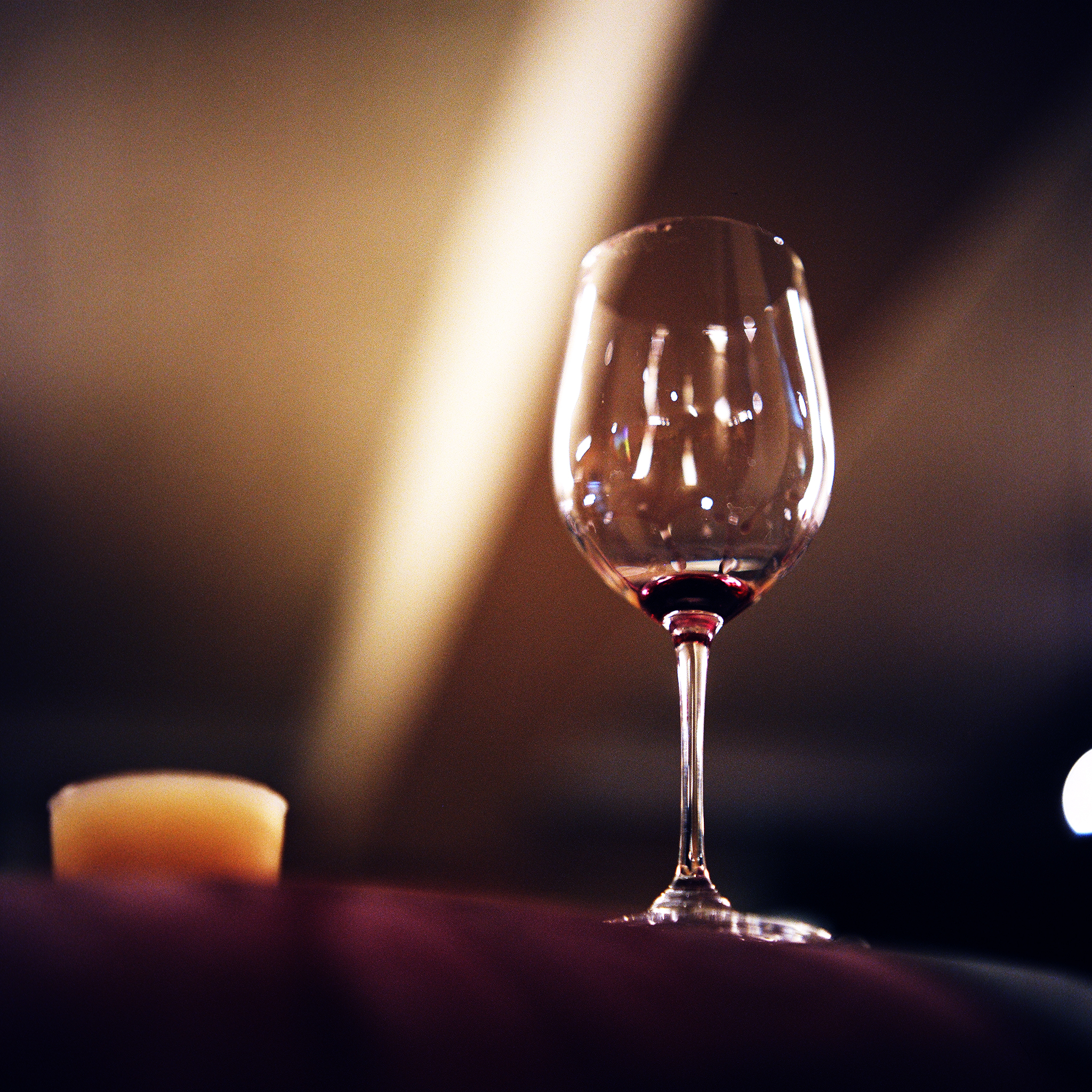
The glass is there, the room is quiet, the telephone is well out of reach, together with the MacBook. No conversation, no laughter, no one opposite who wants to be served or convinced. Instead, another kind of dialogue: briefly with the wine, for longer with my own attention, with the day that is slowly sinking and a morning that will soon begin. This is not an escape. It is a form of discipline.
This solitude is not sad. It is precise. It allows a perception that is scarcely possible in a collective. You listen to yourself more closely. In wine, you taste less of the obvious and more of what reveals itself belatedly: Bitter compounds, length, temperature, aftertaste. The wine is not commented on, but observed. It does not have to please anyone except the person drinking it. Me.
Of course, this is not a plea against sociability. Great wines unfold in conversation, in disagreement, in shared amazement. But something has shifted. The world has become louder, faster, in constant communication. Wine does not respond to this with more volume, but with retreat. It becomes a medium of a quiet presence.
Perhaps that also explains why many people drink differently today than they used to. Less, more selectively, more consciously. It is not intoxication that is at the centre, but the moment. Not confirmation from others, but one’s own resonance. Wine is no longer needed to create closeness – closeness is simulated everywhere anyway – but to make distance possible. A distance that allows thinking to happen again.
This new solitude of the wine drinker is not a loss, but a shift in the role. Wine is no longer automatically sociability, but one option among many. You can share it – or encounter it alone. Both are legitimate. But drinking alone has ceased to be a social stigma. It has become an attitude.
Perhaps this is even a mature form of drinking. One that no longer has anything to prove. No knowledge, no taste, no sense of belonging. Just attention. And time. Two things that have become scarcer than any great vintage.