(Editorial team)
There are certainly fields in which science enjoys a quiet consensus: gravity, photosynthesis. Or winter tyres. And then there are those areas in which science itself becomes a stage – often unintentionally, sometimes permeated by vested interests, but always with an impact on the lives of many people. The wine market is one such area. It remains a billion-market, globally interconnected, culturally charged, politically scrutinised and fraught with health concerns. And it is precisely here that, for the past two or three years, a battle for interpretative authority has been unfolding, the pace and contradictions of which are breathtaking.
No sooner has one got used to a new meta-analysis than a counter-study appears. No sooner has a method been discarded than it is suddenly revived elsewhere. Science seems as though it is arguing with itself – and as though every new data collection claims the opposite of the last.
Two recent studies exemplify this chaos.
The first concerns Generation Z – those born between 1997 and 2012 – who have for years been regarded as the sober avant-garde: Dry January, Sober October, a radical focus on health, and abstinence as a lifestyle. And now? The new IWSR study (the global leader in research on wine and alcoholic drinks) reveals a surprising trend: “Generation Z is increasingly less likely to opt out of abstinence campaigns.” The willingness to go without alcohol for a month fell in the 15 countries surveyed from 30 per cent in autumn 2024 to 28 per cent in autumn 2025. The decline is particularly marked in France, Italy, the UK and Australia – with some double-digit drops. A remarkable figure: “In autumn 2025, 74 per cent of Gen Z respondents stated that they had consumed alcohol in the past six months.” Two years earlier, the figure was just 66 per cent.
The narrative of alcohol-free youth is beginning to crumble. The ‘sober revolution’ – perhaps it was a media phenomenon, perhaps a transitional phase, perhaps mere wishful thinking. Today’s Gen Z bears a closer resemblance to the Millennials and their parents than their image would suggest. This is good news for wine itself. Yet this trend has not yet visibly reached retailers or winegrowers – at least not in Germany and Austria.
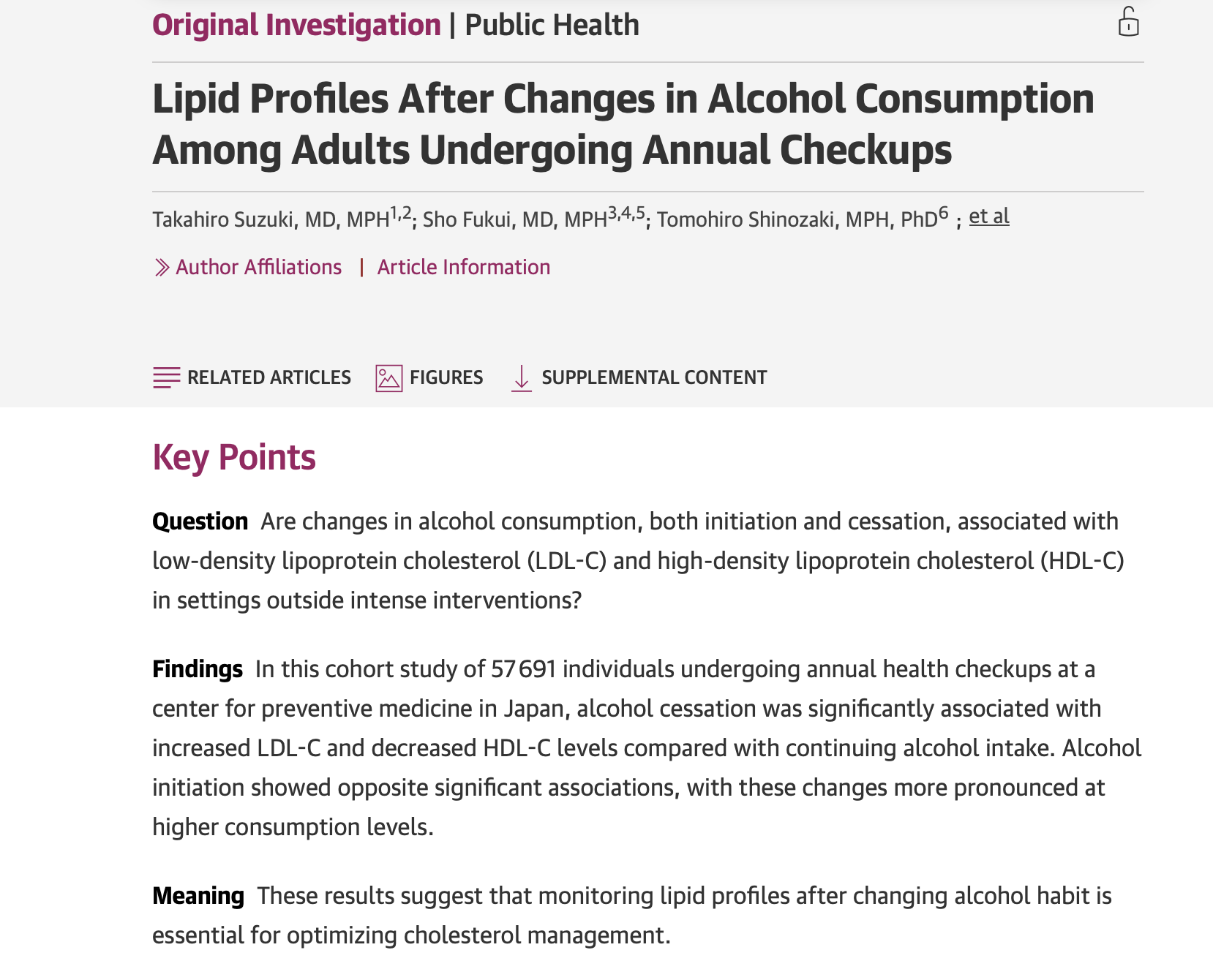
The second new study strikes the same note of uncertainty, but from a completely different angle. The famous ‘French Paradox’, which has been declared dead on several occasions, is making a comeback – backed by new data. Researchers at Harvard Medical School studied 58,000 participants and found: “The ‘bad’ LDL cholesterol falls, and the ‘good’ HDL cholesterol rises, when people start drinking alcohol.” The increase in HDL is reportedly even “higher than that typically achieved through medication”. And what about abstaining from alcohol? The figures are reversed. The effect is said to be “independent of BMI, age or diet” and “occurs with all types of alcohol”.
And just like that, it’s happened: the myth that has been buried a hundred times is back on the table, shaky and questionable, yet surprisingly alive. One gets the impression that even science does not know whether moderate wine consumption is a risk, a placebo or a minor medical sensation.
Between these two studies lies a field that seems to have gone completely off the rails. On the one hand, social research, which no longer knows whether young people want to stay sober or not. On the other, medical research, which is so entangled between recommendations for prohibition and positive effects that any clear message gets lost in the thicket of interpretations.
And right in the middle of it all is wine. It is not merely drunk; it is measured, moralised about and exploited. It is a luxury item, a health hazard, a cultural asset, a source of tax revenue, a subject of research – all at once. For science, this is not solely about the truth. It is about influence, interpretation and narratives that can shape markets worth billions.
The problem is not that the studies are contradictory. The problem is that this contradiction has become the norm. For consumers, winegrowers, retailers – even for journalists – a situation is arising in which the question ‘What is actually true?’ can hardly be answered any more.
Perhaps wine today is less a drink than a symbol of a world that constantly swings between extremes. Between abstinence and indulgence. Between risk and ritual. Between medical warnings and scientific vindication. Between moral imperatives and personal reality.
The reality probably lies somewhere in between: wine is neither a promise of salvation nor an enemy. But anyone wishing to find their bearings in this landscape needs something that no study can provide: their own judgement.
And perhaps a glass of red wine – not as medicine, but as a reminder that some things cannot be measured. And certainly not explained. Only experienced. Experienced. Experienced.
P.S.: The text in the photo translates as:
Of course – here is the precise translation of the text in your screenshot:
Original Investigation | Public Health
Lipid profiles following changes in alcohol consumption among adults undergoing annual health check-ups
Key findings
Research question
: Are changes in alcohol consumption – both starting and stopping – associated with LDL cholesterol (‘bad’ cholesterol) and HDL cholesterol (‘good’ cholesterol) in real-life settings outside of intensive interventions?
Results
In this cohort study of 57,691 individuals who underwent annual health check-ups at a centre for preventive medicine in Japan, stopping alcohol consumption was significantly associated with increased LDL-C levels and reduced HDL-C levels – compared with individuals who continued to drink alcohol. Taking up alcohol consumption showed the opposite, equally significant association. These changes were more pronounced with higher consumption.
Implications
These findings suggest that monitoring lipid profiles following a change in alcohol consumption is essential for optimising cholesterol management.