
by Derfnam Kemilk
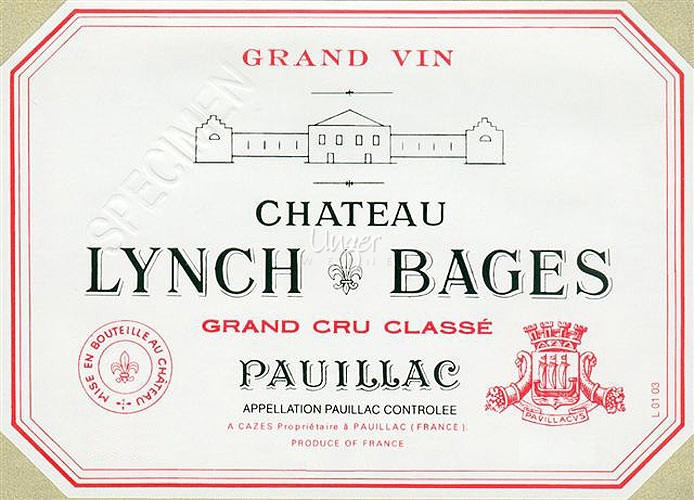
There are thresholds in life, of the liver, that we only recognise once we have long since crossed them. No bang as you cross over, no drumbeat when opening the door – just that one special moment when something changes within you and makes it clear: Now a new era begins, perhaps even a new life. A new passion. Now I want to know everything about wine that I can find out. Now I am a nerd. Now I will become an enthusiast. And all because of that one bottle that I had exceptionally allowed myself at the time: a 1982 Lynch Bages.
Not the most expensive wine in the world. Not the most beautiful and prestigious label, the kind later displayed in a museum of graphic legends. But a wine that was “too expensive” back then within my own horizons – and therefore just right on that day. A bottle whose price I read (849 schillings – approximately 65 euros; a laughable sum today, even allowing for inflation) as a small challenge. I bought it because I sensed that something might happen here. And it happened.
The corkscrew in my hand suddenly seems like a key to a room whose presence I could feel, but which I had never entered. The “pop” of the cork is almost too powerful for the quiet respect of loud anticipation. The glass fills, the nose dives in – and everything one had previously understood as wine moves one step to the side and disappears into the yesterday before it.
The first sip is not fireworks. It is a tear in the curtain. Behind it: depth into which one falls. Time that stretches. Voices speaking one after another – fruit, spice, something dark, something bright. A conversation one no longer wants to end. This is where the account begins to empty.
Sometimes this moment comes late, as with John Arlott, the English cricket commentator who only discovered on a trip to Sicily at the age of 35 that wine can change everything – and from that day left beer and spirits behind. Sometimes it comes in the form of a gift, as with Edmund Penning-Rowsell, who received membership of the Wine Society in 1937 – and with it the key to a 1923 Château Talbot that set his life on a new course. Sometimes it catches us before we can understand it: Jean-Charles Boisset was seven when he tasted a 1969 Clos de Vougeot and a 1964 Bonnes Mares in California. It was only decades later that he understood how early these bottles had shaped him – so much so that he named his own wine range “No. 7”. And sometimes it is so great that it is already legend before one pulls the cork: Hugh Johnson, the great chronicler, tasted an almost 200-year-old Würzburg wine in 1964 – an encounter with time itself, a moment that shows how wine can shatter our understanding of finitude.
From here on, everything is research. You ask, read, search, taste. You make mistakes, you marvel, you experience triumphs in the guessing game of identifying wine. Every answer opens a new door. And at some point you realise: it all began with that one bottle. With that first bottle, which did not simply become empty, but has occupied a space in the mind ever since.
So, in the end, no punchline, but an invitation:
What was your first great bottle?
Not the most expensive one. Not the one you can boast about. But the one that forced you to go deeper. The one that drew you into this endless, contradictory, extravagant world of the art of winemaking.
Tell us about it – on The Wineparty on Facebook or at klimekberlin on Instagram.
Because these stories are the foundation of our passion.