
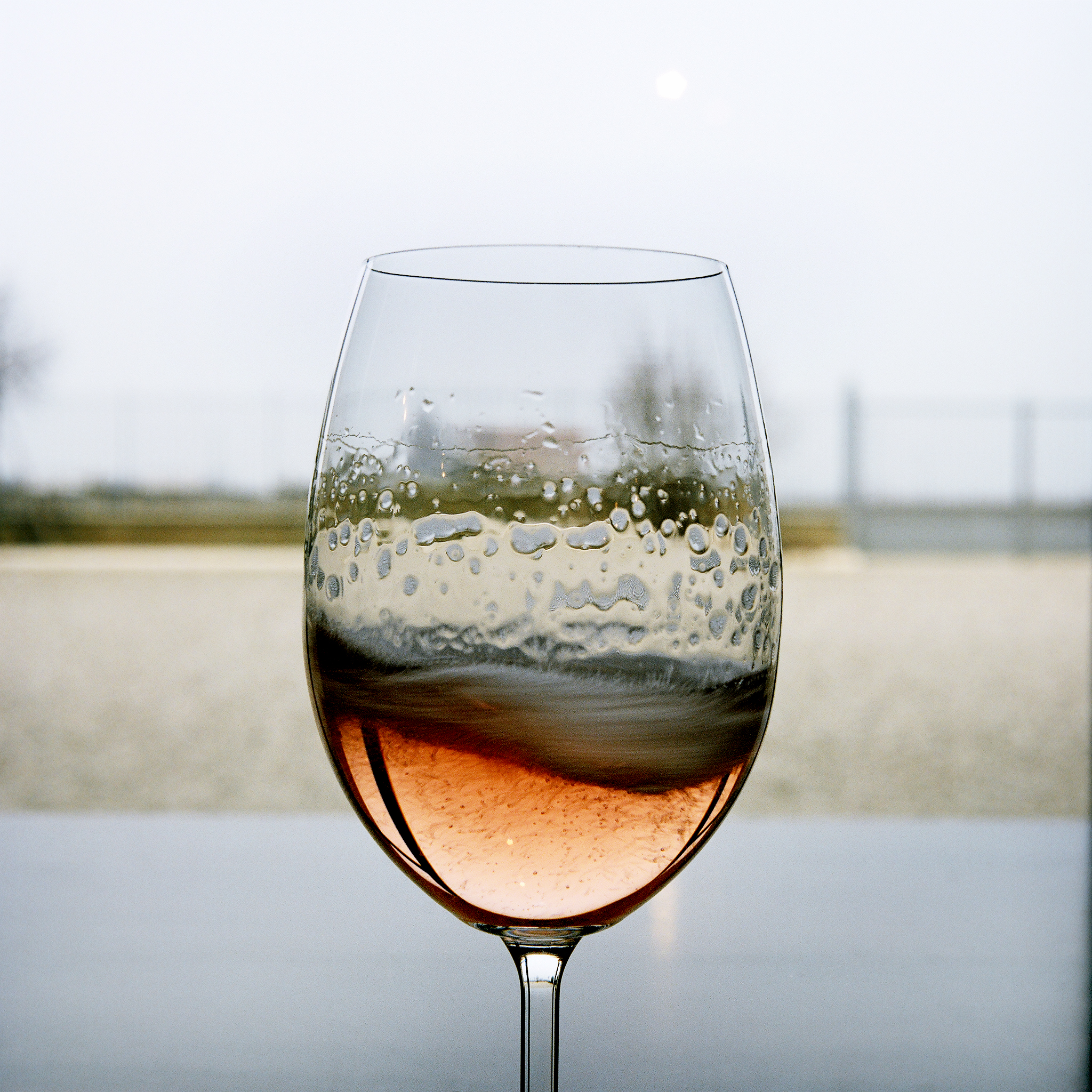
(Leo Quarda / pic: Manfred Klimek)
Whenever time allows, and sometimes simply when everything in Vienna annoys me, I get on a plane and fly to Cyprus. Meeting friends, sitting on the terrace, living differently for a few days, and there are almost always a few bottles of wine in my luggage. Not that there is too little good wine on the island, quite the contrary, but the home cellar also needs to be relieved occasionally, and bottles drunk together travel more sensibly than those standing alone on a shelf.
This time there was a wine with which I have had a long and by no means always harmonious relationship. It takes me back to the late 1970s, when the stuff for the party was still bought at the petrol station, Italo hits were playing in the disco and we cobbled together an Italian way of life for a few hours, which necessarily included a bottle of Lambrusco. It was usually sweet, almost always cheap, and back then we wanted to know little about grape varieties, origin or quality. Lambrusco was part of the first evenings with girls, lipstick on the glass, dancing, necking and, at some point, the more or less orderly walk home or journey on the last tram. It was a time when nobody analysed the wine as long as there was still enough of it left.
The reputation Lambrusco acquired during those decades lasted remarkably long. Cheap, sweet, industrially produced red sparkling wine flooded export markets and damaged the name of an entire wine culture, even though very different Lambruschi had long been produced in Emilia. At some point I myself had completely written off the category, until one found its way into my glass again in 2014. The mistrust was considerable, but the impact was all the more immediate. Since then, L’Acino by Corte Manzini has regularly been part of my cellar.
That evening in Cyprus, therefore, I was less interested in my own reaction than in that of my friends. I poured the wine blind, said nothing and waited. First it was smelled, then tasted, smelled again and tasted again; at some point the first broad grins appeared on their faces. “What the hell is this?” was roughly the common denominator. The bottle did not last long.
L’Acino is made from Lambrusco Grasparossa an indigenous variety from the large Lambrusco family, which is particularly at home around Castelvetro, south of Modena. The grape itself has a small botanical peculiarity: shortly before harvest, the rachis and stems turn reddish, from which the name Grasparossa is derived. The variety produces dark, full-bodied, spicy Lambruschi, has a fair amount of tannin and yields that almost black-violet colour which, at first, does not look at all like an uncomplicated Frizzante in the glass. At Corte Manzini, grapes from vines around seventy years old are used, among others, for L’Acino; it is matured in stainless steel, and the second fermentation takes place using the Charmat, or Martinotti, method. The result has 11.5 per cent alcohol and is bottled dry.
Castelvetro lies in an area where people know precisely why Lambrusco is supposed to taste the way it does. Modena and Parma are close in culinary terms; Parmigiano Reggiano, Prosciutto, Mortadella and the generous cuisine of Emilia call for a wine with freshness, carbonation, fruit and a certain bitter structure. Lambrusco was never party swill here, but part of a regional food culture, and in recent years the renaissance of dry, seriously handcrafted versions has once again made visible, especially outside Italy, what had almost been lost among all the sweet export bottles.
The L’Acino smells of raspberries, cherries and dark berries, accompanied by spice, bitter freshness and that gentle perlage which carries the wine across the tongue at astonishing speed. It is dry, juicy, dark and fruit-driven, with enough structure not to become boring after the second glass. Above all, though, it is enormously enjoyable. Well chilled and drunk on a meadow, a terrace or anywhere else, it needs neither reverence nor large glasses, and certainly no lengthy explanation. It wants to be swallowed, and that is exactly what happened that evening in Cyprus, with remarkable consistency.
In the end, my friends’ only criticism was that I had brought just one bottle. Then came the inevitable question of where one could buy the stuff, and that very evening I resolved to order another case. The next trip to the island is sure to come, as is the next evening on the terrace, and this time I will not repeat one mistake.
One bottle of L’Acino is clearly not enough.
Source:
K&U – Die Weinhalle
Gebr. Kössler & Ulbricht GmbH & Co. KG
Nordostpark 78
90411 Nuremberg